

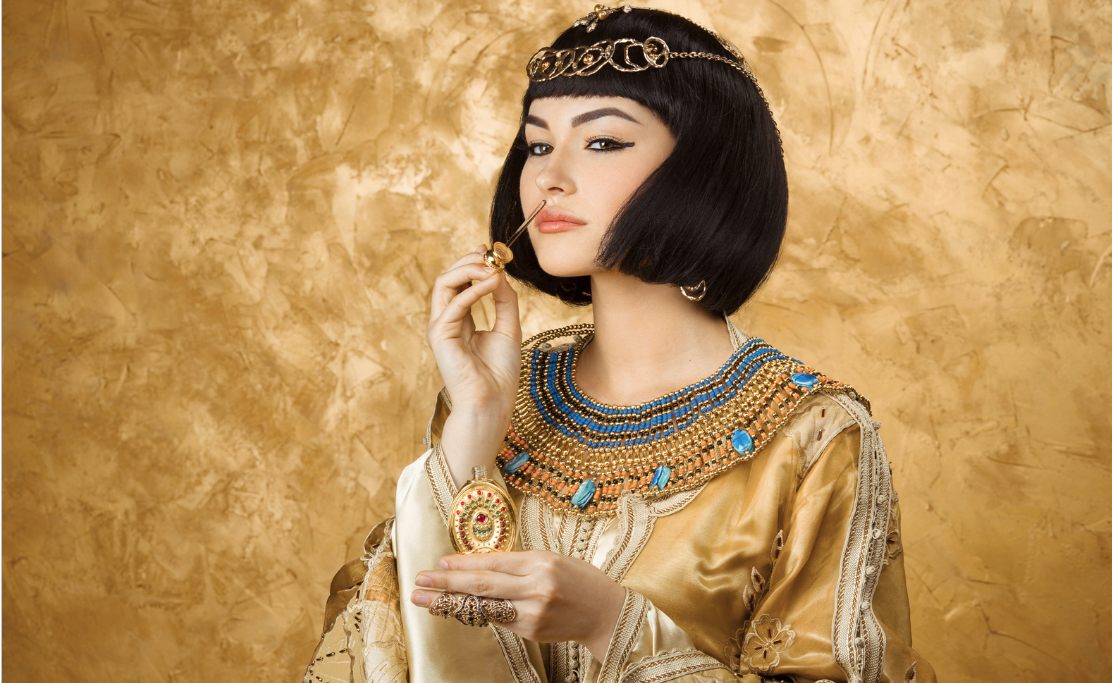
“Egyptian love spells” can refer to very different things: surviving ancient manuscripts, a modern devotional practice or a newly written ritual using Egyptian names. The label alone does not tell you which you are reading.
Start with the object, date and language. That approach makes the history more interesting and prevents a modern recipe from acquiring an invented ancient pedigree.
Egyptian is a place and a history, not one timeless recipe
A text produced in Roman-period Egypt belongs to a different setting from an object made centuries earlier. A Greek-language spell from Egypt is not automatically a hieroglyphic text, and a later practice should not be projected backward simply because it invokes a familiar deity.
Ask a precise question: which manuscript or object supports this description? A museum catalogue number and an identifiable passage are more useful than an assertion that “the Egyptians always did this.” You can acknowledge gaps instead of filling them with a confident story.
One actual example: the London Magical Papyrus
The British Museum’s catalogue record for EA10070,3 identifies part of the London Magical Papyrus as a Roman-period manuscript from the third century CE. Its description distinguishes Demotic writing, Old Coptic glosses and Greek recitation. This is a specific multilingual object, not a single set of customs representing every period of Egyptian history.
The catalogue lists different kinds of material in the manuscript and identifies a love spell on the reverse side as PDM xiv. 1206–18. That reference gives a reader something definite to follow. It does not demonstrate that a spell achieved its promised result.
The object also illustrates why a general title can mislead. A handbook may contain material for several purposes; a description of the whole manuscript is not a translation of every passage. If you want to study the wording, follow the catalogue’s scholarly references and distinguish the original text from a translator’s explanation.
What another collection adds to the picture
British Library papyri researcher Dr Federica Micucci’s article on love spells in the Greek Magical Papyri discusses particular manuscripts, including a handbook probably from fourth-century CE Egypt. It explains that some spells sought to compel a person’s approach or attachment, and could describe suffering as part of that aim.
These sources document what certain texts instructed or claimed. A claim of immediate or permanent effect inside a manuscript is evidence about the text’s promise, not verification that the promise came true. Keep that distinction even when a historical phrase sounds confident.
The historical material can also raise an ethical question. An instruction aimed at compelling a person is different from a modern practice in which everyone freely agrees to participate. Studying the former does not require reproducing it or presenting coercion as romance.
A later Coptic example shows how context changes
The scholarly Kyprianos record T343 identifies a different love formula as P. Mich. Inv. 4932f and places it within 501–700 CE. It is written in Coptic. Its translation includes Isis and Osiris, while the reverse also refers to the Devil and judgment: the religious setting cannot be reduced to a list of ancient Egyptian gods.
The translation uses “NN” where names would be supplied. The editorial notes also consider whether part of the formula sought to maintain an existing relationship. These details show why the wording and scholarly discussion of a particular text matter; a broad label does not establish one purpose for every love spell.
Three labels that help you read a ritual accurately
1. A documented historical passage
Look for an identifiable object or manuscript, a date or date range, a passage reference and a credited translation or scholarly explanation.
Keep claims close to that source. One passage cannot establish that an entire culture followed the same practice.
2. A modern adaptation
A writer may adapt a historical motif for a present-day practice. The adaptation should be described as modern, with a clear distinction between what comes from the source and what has changed.
An Egyptian name, a moon phase or a decorative symbol does not establish ancient provenance.
3. A personal devotional practice
A person may pray or create a private symbolic practice that matters to them. It can be meaningful without being a reconstruction of an ancient text.
Be clear about that purpose. Personal meaning does not prove a translation, a historical origin or an effect on someone else’s choices.
A four-question source check
- What is the source? Find the named object, manuscript or publication. “Ancient secret” is not a reference.
- When and where does it belong? Keep the actual period, place and language in view. Leave an uncertain date uncertain.
- Who explains the wording? Separate a translation from a summary, commentary or newly written invocation. Do not assume an unfamiliar phrase has the meaning a seller assigns to it.
- What is being claimed now? Distinguish a historical belief, a modern spiritual interpretation and a promise of a practical result. Each requires different support.
A worked example: a recipe described as ancient
In this fictional example, Dana finds a modern ritual that combines a deity’s name, a Friday schedule and a perfume mixture. The page calls the whole recipe Egyptian but supplies no manuscript reference.
- What Dana can establish
- The modern page contains those instructions. Their presence on the page does not establish when the combination originated.
- What remains missing
- There is no identified object, passage or credited translation linking the recipe to a specific historical setting.
- A useful comparison
- Dana reads the museum catalogue and notices how precisely it identifies a manuscript’s period, languages and passages. The catalogue does not authenticate the unrelated perfume recipe.
- The decision
- Dana treats the recipe as an unverified modern claim and chooses not to prepare or apply it. Historical curiosity can continue through the actual sources.
The source check does not require declaring every spiritual practice false. It prevents a claim about origin from being accepted without the information needed to assess it.
Names and symbols need their own context
Do not assume that a list of names is interchangeable or that every named figure is a deity. Check the specific claim rather than relying on how “Egyptian” the wording sounds. Likewise, an image of hieroglyphs is not proof that a chant has been translated correctly.
You do not need to reproduce unfamiliar words to study a text respectfully. Read a credited explanation, note uncertainty and avoid assigning a newly written phrase to an ancient author or tradition. A modern intention can be presented honestly in your own words.
Historical interest does not require following a recipe
A surviving instruction is not a present-day product-safety assessment. Do not prepare a potion, apply an unknown mixture, burn materials or place substances in someone else’s food or drink because a text is old or has a spiritual label. Leave dangerous materials and actions in the historical discussion.
A private reflection can instead focus on what you want in a mutually chosen relationship: honesty, affection, availability or a shared agreement. It need not promise to attract a named person, defeat a refusal or produce a result within a certain number of days.
For the broader cross-cultural discussion, see love spell history across cultures and time. Keep the narrower Egyptian question grounded in identifiable sources. You can appreciate a complicated history without turning it into a guarantee or a how-to instruction.
Questions and answers
1. Are all Egyptian love spells from the same period?
No. The label can cover material from different periods and languages as well as modern adaptations. Look for an identifiable object, date and passage rather than assuming a single timeless tradition.
2. What is an actual surviving example?
The British Museum catalogue identifies a love spell within the London Magical Papyrus at EA10070,3, with the passage reference PDM xiv. 1206–18. The catalogue places that manuscript in Roman-period Egypt in the third century.
3. Does a historical promise prove a spell worked?
No. A text’s claim of immediate or lasting effect tells you what it promised. It does not independently verify the result or establish that a modern adaptation will affect another person.
4. Is an Egyptian name enough to authenticate a modern ritual?
No. A name or symbol does not establish the origin of a whole recipe or the meaning of an unfamiliar phrase. Ask for the actual source and distinguish a credited translation from newly written words.
5. Do I need to reproduce an ancient recipe to study it?
No. You can study the object, translation and commentary without preparing substances or performing its instructions. An old text is not a present-day assessment of product safety or consent.
6. Can a modern practice still have personal meaning?
Yes. A personal reflection or devotional practice can matter without being described as an ancient reconstruction. Be honest about its origin and keep it separate from promises about someone else’s choices.
I appreciated the breakdown of symbols used in Egyptian love magic and their meanings. It’s intriguing how these ancient practices still resonate. Nonetheless, the article had some syntax errors and could benefit from a more cohesive edit.
The article gives a thorough overview of the rituals involved in Egyptian love magic. The importance of determining the suitability of a partner before casting spells is a intriguing point. Nonetheless, the narrative structure could be refined to enhance clarity.
Understanding the role of gods and goddess in Egypian magic is compelling. However, some sectons felt a bit redundant and the syntax could have been more polished. The recommendation to be fully committed before casting spells seems very prudent.
It’s fascinating how Egyptian magic intertwines with mythology. The emphasis on responsibility when casting spells is quite relevant, modern practitioners need to be aware of potential consequences. However, there were some grammatical inconsistencies that distracted from the content.
This article provides an insightful examination of Egyptian magic, especially in relation to love. The cultural context and historical background makes it engaging for anyone interested in ancient practices. However, I would like more details on the ethical implications and responsibilities that come with using such spells today.