

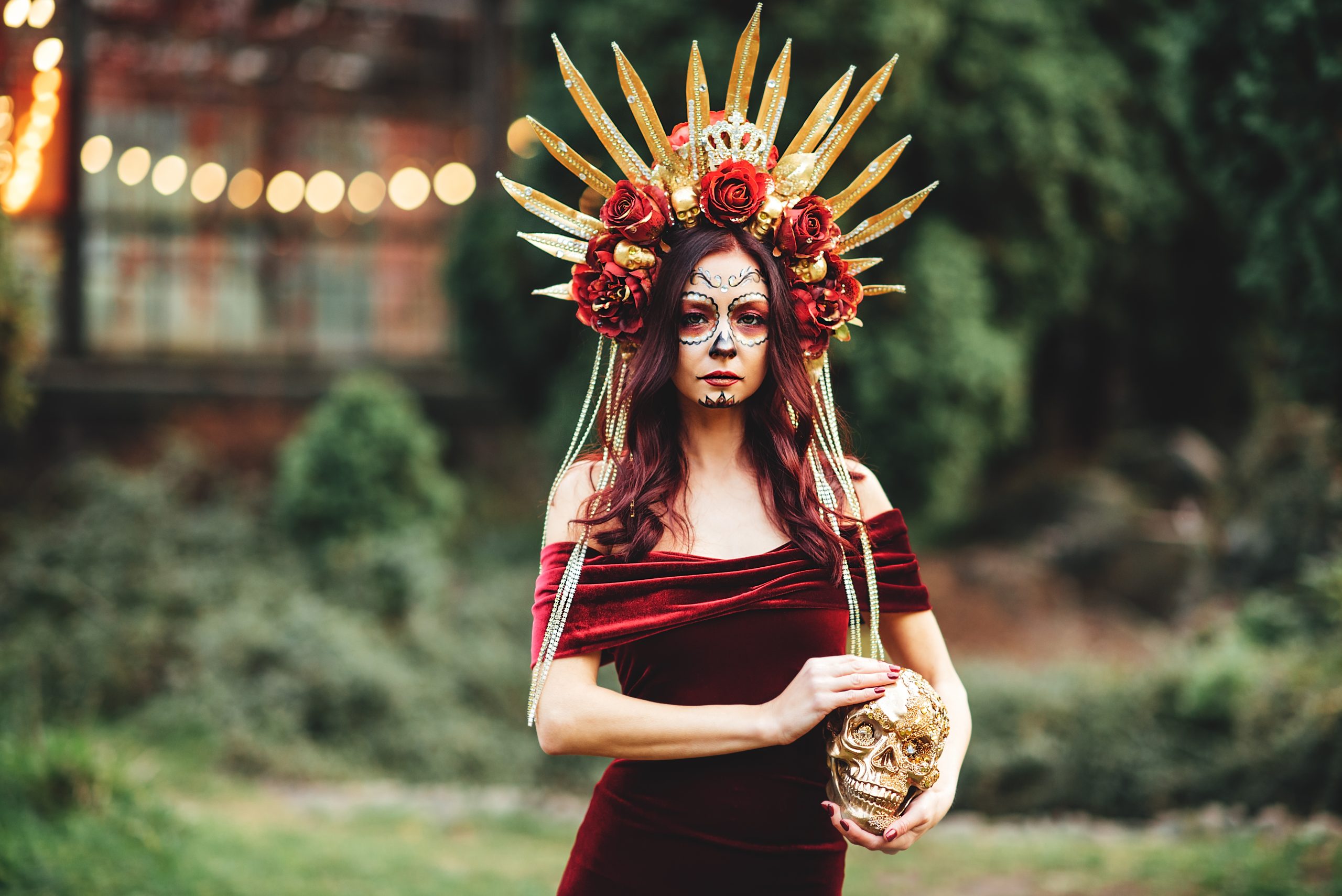
Hecate, also spelled Hekate, is a goddess in ancient Greek religion and mythology, associated with pathways, the night and magic. She is not a historically documented woman who became a witch. Her stories and representations offer several ways to understand her, rather than one fixed portrait.
If you are drawn to Hecate, begin with a distinction: an ancient poem tells a story, a sanctuary records a place of worship, and a present-day devotional practice expresses someone’s beliefs. These can inform each other without being the same kind of evidence.
Hecate is more than one frightening image
Calling her simply an evil spirit or an elderly witch misses the range of surviving material. In Hesiod’s Theogony, in Hugh G. Evelyn-White’s translation, Hecate is the daughter of Asteria and Perses. Zeus honors her, and the poem describes her influence across earth, sea and heaven and in many human activities.
Read those honors as part of the poem’s religious world. They do not establish a promise that a modern invocation will produce wealth, victory or a particular relationship. The poem also calls her a nurse of the young; that is not clinical evidence about fertility, pregnancy or childbirth.
What she does in the story of Persephone
In the Homeric Hymn to Demeter, also translated by Evelyn-White, Hecate hears Persephone’s cry when she is taken. Later, carrying a torch, she meets Demeter. She explains that she heard the cry but did not see who took the girl. The two go to Helios for more information.
After Persephone’s reunion with Demeter, Hecate becomes Persephone’s attendant and companion. She contributes to the story without being the person who single-handedly finds and brings Persephone back.
A reader might find meaning in her companionship or her torch. That is a possible personal response to the story, not a requirement to interpret every difficult event as a message from her.
Three sources, three different questions
| Source | What to look for | Question to keep separate |
|---|---|---|
| An ancient poem | What Hecate says or does in that particular narrative, and which translation you are reading. | Does the poem describe this action, or am I adding a later interpretation? |
| A museum object | Its date, material, object number and the curator’s identification. | What does this particular representation show, rather than every image ever made of Hecate? |
| A sanctuary | The named place, its buildings and the practices described for that community. | Is a local ceremony being mistaken for a rule followed everywhere? |
What does her triple form mean?
A triple representation is a real feature of ancient art, not a reason to picture every Hecate as a three-headed dog-woman. The Metropolitan Museum of Art’s marble hekataion, object 1987.11.2, is catalogued as triple-bodied Hekate with the three Graces and dated to the first–second century CE. CE means Common Era. The museum’s description connects her with pathways, crossroads and nocturnal sorcery.
Keep the statue’s identification and date attached to the example. A present-day person may give a triple image a further meaning, but a modern explanation does not automatically tell us what an ancient maker or worshipper intended. Ask for a source before treating three bodies as proof of one universal system of ages, moon phases or personality types.
Lagina is a place, not the name for every temple
Turkish Museums describes the Hecate sanctuary at Lagina, in present-day Türkiye, and its connection to Stratonikeia by a sacred road. Its account includes the temple, altar and entrance structure, along with a key-carrying ceremony between the sanctuary and the city.
This is a specific religious setting. It helps explain why a key can have a documented place in a discussion of Hecate, without turning a modern key charm into a recovered ancient ritual. It also corrects the idea that “a Lagina” is simply a generic kind of temple.
Interest, devotion and claims of a calling
You can study Hecate because her stories interest you. You do not need to decide that she has selected you, and another person cannot establish that selection by interpreting your dreams or selling you a reading.
A dog howling, a repeated number or a meaningful coincidence is not a reliable test of divine contact. If you keep a journal, describe what happened before interpreting it: “I noticed the number again and felt curious” is different from “I have received an instruction I must obey.” A tarot reading may be part of someone’s personal practice, but it does not verify a goddess’s identity or wishes.
Likewise, a modern observance should name its community or source. If someone gives you a fixed annual date, a required number of objects or a list of favored herbs, ask where the instruction comes from. A particular devotee’s approach need not become a universal rule or an obligation for you.
Five steps for exploring Hecate thoughtfully
- Choose one question. You might ask what Hecate does in a poem, how a statue represents her or what a named sanctuary’s ceremony involved.
- Read the actual account. Keep the title, translator or museum object number with your notes. Avoid combining several centuries into one timeless description.
- Describe before interpreting. Write what the source says first. Put your response or devotional meaning in a separate sentence.
- Choose an optional, modest activity. Reading, writing a personal reflection or drawing a torch or doorway can be enough. You do not need a purchased altar set, a flame or an outdoor offering.
- Keep your decision your own. You can continue studying, adopt a practice consistent with your beliefs, change your approach or stop. A symbol does not remove your right to choose.
A filled-in reading note: Rowan reads the hymn
In this fictional example, Rowan wants to understand Hecate’s role without turning a story into a prediction.
- The source
- The Homeric Hymn to Demeter, in Evelyn-White’s translation.
- The action in the story
- Hecate hears Persephone’s cry, tells Demeter what she knows and accompanies her to Helios.
- Rowan’s personal response
- “I value the difference between being supportive and pretending to know every answer.” This is Rowan’s reflection.
- The practical next step
- When a friend asks for help, listen and be clear about what is known and what still needs checking.
A respectful personal practice need not be elaborate
If devotion fits your beliefs, you can write your own words of thanks or spend a quiet moment with a story. Describe this as your own practice rather than claiming an ancient instruction you have not traced. For arranging a space, see ritual tools and their optional roles on an altar.
Keep any activity appropriate to the place and the people or animals around it. There is no need to leave food where wildlife or pets can reach it, bury objects, enter a cemetery after hours or light a candle at a road junction. A private reflection at home avoids those problems.
Hecate’s presence in Greek material does not make every modern interest in her the same religion. For the separate question of Wicca and its traditions, see our introduction to Wiccan beliefs and history. Take time to learn the context before choosing a label or making a commitment.
Questions about Hecate
1. Is Hecate the same as Hekate?
These are alternative English spellings used for the goddess. Keep the spelling used by a particular text or museum when recording a source so the example is easy to find again.
2. Was Hecate a real woman who became a witch?
The sources discussed here present her as a goddess in religion and mythology, not a historically documented human witch. A modern description should keep that distinction clear.
3. Did Hecate bring Persephone back by herself?
In the Homeric Hymn to Demeter, she hears Persephone’s cry, meets Demeter with a torch and goes with her to Helios. Later she becomes Persephone’s attendant and companion. That is a supporting role in a larger story.
4. Does every ancient image show Hecate in the same way?
Do not assume that one representation defines them all. The Met’s object 1987.11.2 provides a specific triple-bodied example with its own date and description. Keep a particular object distinct from a universal claim.
5. Is Lagina a kind of temple?
Lagina is a named archaeological and religious site in present-day Türkiye. The sanctuary described by Turkish Museums contains a temple and other structures. It is not a generic word for any temple dedicated to Hecate.
6. Does seeing thirteen or hearing a dog prove a calling?
Neither is a reliable test of divine contact. You can record the event and your response without treating an interpretation as an instruction or an obligation to buy something.
7. Can I learn about Hecate without performing a ritual?
Yes. You can read a translated poem, compare museum records and keep notes without making a religious commitment. A personal practice is optional; studying a goddess does not require claims of contact or guaranteed results.
The historical context provided in this article about Hecate is indeed intriguing. Her multifaceted nature as both a life and death deity makes her a compelling figure in ancient mythology.
The descriptions of how to honor Hecate are very detailed. However, some of these practices might be considered controversial or culturally sensitive given today’s societal norms.
The mythology surrounding Hecate and her association with various natural and supernatural phenomena is quite rich. However, one must question the practicality of incorporating such ancient practices in modern times.
it is interestin that Hecate is linked with so many elements like garlic and dogs. The rituals and offerings seem to offer a structured way to connect with her, but it might be difficult for some people to meet these requirements.
The article’s thorough explanation on Hecate offrs a comprehensive insight into ancient Greek beliefs. The rituals and offerings are detalied, but I wonder if they have evolved over time to fit modern interpretations.
Indeed, the evolution of such practices could be a fascinating area of study. It’s remarkable how ancient traditions can persist and adapt to contemporary settings.