

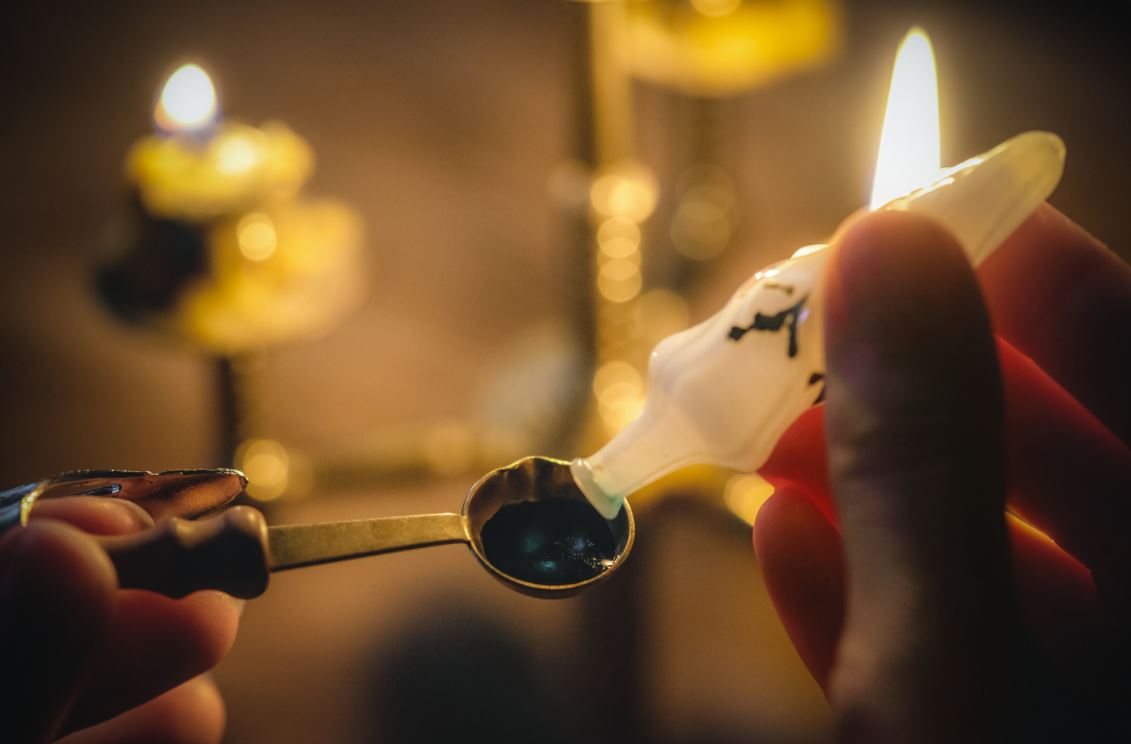
A candle can give a personal intention a visible focus. You might choose a color, write a phrase beside it or pause before an ordinary next step. The meaning comes from your practice; the candle’s color and flame do not demonstrate that a wish will happen or that someone else’s feelings have changed.
This guide separates three choices: the symbolism you want, how you prepare the object and how you respond to a real flame. You can use an unlit candle, a battery-operated light or a colored card for the same written reflection.
Choose a color as a cue you can explain
Candle-color charts offer different associations. You do not need to treat one chart as a universal rule or buy a particular shade to avoid failure. If you follow a specific tradition, learn its meanings in that context. For a personal exercise, the examples below show how a color can remind you of an action rather than promise an outcome.
| Color | A meaning you could choose | A concrete action it could remind you to take |
|---|---|---|
| White | A fresh start or a quieter space. | Clear one surface and write what you want to begin. |
| Blue | Careful communication. | Prepare one honest question and make room to listen. |
| Orange | Playfulness or a new idea. | Set aside time for a small creative project. |
| Red | Courage or enthusiasm. | Make a respectful invitation that allows a no. |
| Yellow | Attention or clarity. | Name one task and the first step you can take. |
| Green | Growth or care for what you have. | Review a habit, tend a plant or organize a household task. |
| Purple | Reflection or learning. | Write a question you want to explore without assuming an answer. |
| Pink | Kindness or friendship. | Offer a welcome gesture or keep a promise to yourself. |
These are optional personal examples, not predictions or a claim that every tradition uses these meanings. A green candle does not establish a health, fertility or financial result. A red or pink candle does not create another person’s consent. Use a color you already have, or leave color out.
Prepare the intention without altering the candle
“Dressing” and “charging” are terms you may encounter for preparing a ritual candle. Their spiritual meaning does not make an arbitrary ingredient suitable to burn. Do not roll a candle in loose herbs, add an unknown oil or put paper and other objects into its wax.
Keep your written intention separate from a flame and anything hot. You can say a phrase while the candle is unlit, place a note in a journal or choose an ordinary lamp. You do not have to carve names into wax, handle a lit candle or use smoke to make your purpose valid.
For the separate question of what is in a product sold as a ritual oil, see the guide to ritual-oil labels and intended use. A scent or spiritual product name does not replace the actual product directions.
Read flame changes as a handling question
A tall, small, dancing or extinguished flame is not a reliable test of whether a spell succeeded. It also does not establish that a spirit has arrived, an enemy is interfering or a relationship is about to change. You can record what you noticed without assigning a hidden cause.
The National Candle Association’s candle FAQs explain that air movement and wick condition can disturb a flame and produce soot. Its advice for continued flickering or smoking is to extinguish the candle, allow it to cool and address the setup before considering reuse. Follow the manufacturer’s instructions for your particular candle, including burn time and when to stop using it.
Observation is different from interpretation
What you observed: “The flame flickered and the candle began to smoke.” That describes a visible event.
What it does not establish: “Someone is resisting my intention.” That adds a claim the flame cannot verify.
A practical response: End the burn and follow the candle’s cooling and care directions. Do not keep watching an improperly burning candle to gather more spiritual signs.
If a candle pops, a container cracks or the product behaves unexpectedly, stop the ritual and deal with the actual problem. Do not touch hot wax or a damaged hot container, add ingredients to the flame or treat the event as permission to keep burning. If there is a fire you cannot safely manage, leave and call the local emergency service.
A five-step color-and-intention exercise
- Name something you can do. Choose an intention such as listening, beginning a task or making a respectful invitation.
- Choose a cue. Pick a color that makes sense to you, an unlit candle or a flameless light. No purchase is required.
- Write one plain sentence. For example, “I will ask one clear question and listen to the answer.” Keep the paper away from heat.
- Make a separate lighting decision. The exercise works without flame. If you use one, follow the product’s directions and stay with it.
- Close and act. Extinguish any candle before leaving or sleeping, allow cooling as directed and take the ordinary step you named.
A filled-in example: Morgan chooses blue for a conversation
In this fictional example, Morgan wants to discuss a shared household responsibility. The color is a reminder for Morgan’s conduct, not a way to make a housemate agree.
- The intention
- Ask whether a different arrangement would work for both people, and listen before proposing a solution.
- The chosen cue
- A blue card beside an unlit candle. Morgan does not add oil, herbs or a flame to the setup.
- The practical next step
- Ask for a suitable time to talk, then describe one specific task and invite the housemate’s view.
- What would count as an answer
- The actual conversation and any freely made agreement. A color, flame movement or feeling during the exercise does not decide what the other person thinks.
Keep the surroundings part of the choice
The U.S. Fire Administration’s candle guidance recommends flameless alternatives and stable holders for lit candles. Keep burning candles at least 12 inches, about 30 centimetres, from things that can catch fire, and extinguish them before leaving the room or going to sleep.
A ritual does not require a candle to burn to the bottom. Follow the candle maker’s limits, keep the area clear and respect anyone who does not want flame or fragrance in a shared space. Once the setup has cooled as directed, the ritual-material aftercare guide helps you separate storage, reuse and local disposal questions.
For a relationship-focused personal ceremony rather than a general color reference, see candle magic love spells. You can choose a meaningful practice while leaving another person free to decide how they feel.
Questions about candles, color and flame meanings
1. Do I need the exact candle color from a spell?
No. A color can be a personal or tradition-specific symbol, but it is not a demonstrated requirement for producing an outcome. Use a color you have, ask about the context of a tradition you follow or leave color out of your private reflection.
2. Does a green candle bring money, fertility or good health?
A color association does not establish those results. You can use green as a reminder to tend something, review a habit or organize a task. Health and fertility concerns deserve appropriate care, and financial decisions need ordinary information rather than a candle-color prediction.
3. Can I use an unlit candle or a battery-operated light?
Yes. You can give the object a personal meaning without a flame. A colored card or ordinary lamp can also serve as a visible cue for a written intention and a practical next action.
4. Should I add oil or herbs to make the candle stronger?
Do not add arbitrary oils, loose herbs, paper or other objects to a candle’s wax or flame. A ritual instruction does not establish that a modified candle is suitable to burn. Follow the manufacturer’s directions or keep the exercise flameless.
5. Does a flickering flame prove a spirit is present?
No. Flame movement does not verify a spirit, an unseen opponent or the success of an intention. Consider the actual candle and surroundings. If flickering or smoking continues, extinguish it and follow cooling and care instructions before considering reuse.
6. If the candle goes out, has my spell failed?
An extinguished candle does not establish a supernatural result. Do not repeatedly relight it to force a sign. Check the product’s condition and directions after appropriate cooling, or finish the reflection without flame.
7. How long must a ritual candle burn?
There is no required spiritual burn time in this exercise. Follow the manufacturer’s limits for the exact candle. End any flame before leaving or sleeping; do not burn a candle to the bottom because a ritual says that is necessary.
8. What should I judge after a relationship intention?
Look at real communication, behavior and freely made choices. A candle does not reveal someone’s private feelings or create agreement. Choose a practical step within your control and accept the other person’s answer.
I am intrigued by this concept of candle magic, primarily in how its use of colors influences spells. Nevertheless the section on oils and herbs was less clear. A list of commonly used herbs and their significances might be helpful.
Candle magic is not a topic I’m familiar with, yet this article offered a well-rounded introduction. However, I’d appreciate more clarity on why certain colors are linked to specific intentions. It seems quite arbitrary without further explanation.
This article provides a comprehensive guide on candle magic. the description of how to ‘dress a candle’ was particularly interesting. It’d be good to know more about the historical context of such practices. Might add a layer of understanding.
Intriguing read on candle magic. I found the detailed explanations of each candle color quite useful. However, I would recommend including more scientific insights on how these energies are believed to work.
The notion of using candles for spellcasting was new to me. The various steps for ‘dressing’ a candle were well articulated, though I feel explanations on the scientific or psychological basis behind these practices would be beneficial.