

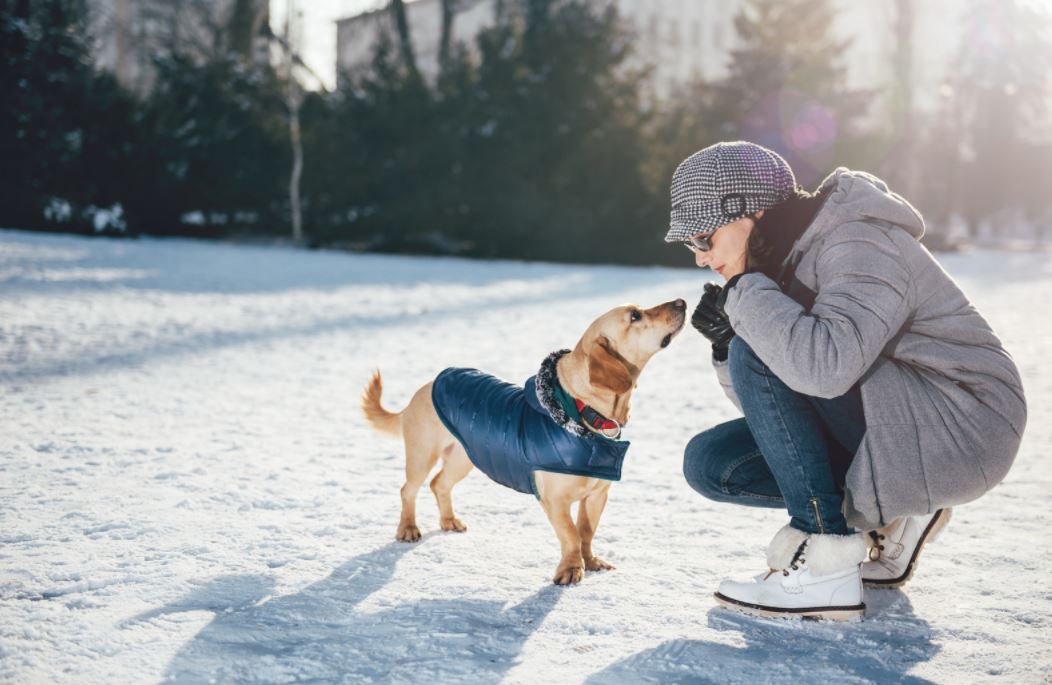
You may feel especially close to a pet during a quiet moment: a dog settles beside you, a cat approaches when you sit down, or an image of the animal comes to mind. Some people describe that bond as telepathy. The experience can have personal meaning without telling you exactly what the animal thinks.
If you want to explore an intuitive practice, keep your impressions separate from observable behavior. Your pet’s needs, freedom to move away and veterinary care remain more important than obtaining a message.
Begin with two different kinds of information
1. What you can observe
Record what the animal actually did, where it happened and what changed nearby. “The cat went behind the chair when the visitor entered” is more useful than a conclusion about the visitor’s energy.
Behavior needs context and knowledge of the species and individual. A single movement is not a complete translation.
2. What you imagined or felt
A word, picture or feeling that comes to you is an impression. Write it as “I pictured…” rather than “My pet told me…” when you cannot verify its source.
The distinction lets you value a reflective experience without using it as evidence for a diagnosis, instruction or accusation.
3. What needs checking
A change in eating, movement or behavior is a reason to consider the animal’s actual needs and ask a veterinarian when appropriate. It is not a puzzle you must solve through concentration.
If you are concerned about the pet’s health, contact its veterinary team. Do not wait for a reassuring image to decide whether to seek advice.
An optional quiet practice that leaves the pet a choice
Choose an ordinary moment when the animal is already comfortable. There is no need to wake it, restrain it, stare into its eyes or bring it close for the exercise. You can sit at a comfortable distance and let the animal approach, remain where it is or leave.
- Notice the setting. What is happening around the pet? Describe the room, recent activity and what the animal is doing, without interpreting a hidden message.
- Set a modest intention. For example, “I want to pay attention and respect your space.” You are choosing your own behavior rather than sending an instruction the animal must obey.
- Write any impression separately. If a word or picture occurs, label it as your impression. Do not turn it into a command about food, medicine or another person.
- Return to observable care. Check ordinary routines and any practical question that needs attention. Finish whether or not an impression appeared.
If the animal moves away, let it. Remaining still, accepting handling or looking in your direction does not by itself establish enjoyment or agreement. You do not need to repeat the exercise until the pet behaves the way you hoped.
Learn the animal’s actual ways of communicating
Different species and individuals communicate differently. Learn from a veterinarian or a qualified behavior professional who works with your kind of pet. Ask what to observe in context, which changes deserve attention and how to make handling less stressful.
The American Veterinary Society of Animal Behavior’s position statement on positive veterinary care emphasizes recognizing fear and anxiety and reducing force during care. It also notes that an animal that appears passive may still be frightened. Quietness alone is not a reason to conclude that a pet feels safe.
For dogs, AVSAB’s current training position recommends reward-based methods. Do not punish an animal for failing to respond to an imagined message. A training difficulty is a question for an appropriate professional, not evidence that the pet is resisting your spiritual bond.
A worked example: an image of the carrier
In this fictional example, Morgan is thinking about a cat’s upcoming veterinary visit and pictures the cat’s carrier. Morgan initially wonders whether the cat has sent a warning.
- The observation
- The appointment is approaching, and Morgan has been thinking about travel. The cat is resting elsewhere; Morgan has not observed a new behavior.
- The impression
- Morgan pictured the carrier. The image does not establish the cat’s private thoughts or predict how the appointment will go.
- The practical question
- Morgan wants to know how to prepare for the visit without unnecessary stress. That question can be discussed with the veterinary team.
- The action
- Morgan contacts the clinic for guidance suited to this cat and follows the agreed plan. The appointment and any medication instructions are not changed on the basis of the image.
The impression prompted a useful question. It did not supply the answer.
Keep important decisions outside a telepathy exercise
Do not change a prescribed medicine, withhold care or test a possible hazard because you think a pet has sent permission. Ask the veterinarian about treatment and handling questions. Describe what you have noticed in ordinary terms so the team has information it can use.
If a pet is missing, use practical recovery steps and local help rather than waiting for a mental picture of a location. An impression is not confirmation that the animal is safe or that a search should stop. Do not enter an unsafe place or accuse someone on the basis of it.
A story about an animal seeming to anticipate an event does not establish telepathy or reveal how the event was predicted. Keep room for explanations you cannot determine. An affectionate bond does not depend on proving an extraordinary ability.
Respect the bond without making it a test
You can enjoy quiet companionship, familiar routines and the feeling of being understood. You can also be uncertain about an experience. For a broader discussion of noticing an impression without treating it as verified information, see knowing your psychic gifts.
When a pet dies, a dream or sense of connection may be personally meaningful. It does not provide information that you must act on or require a paid service to interpret. Give yourself room to remember the animal, seek support and choose the meaning you want to give the experience.
Questions and answers
1. Does a mental picture prove my pet sent a message?
A picture or feeling can be personally meaningful without verifying its source. Record it as an impression and keep it separate from what the animal actually did and what needs checking.
2. Should I hold my pet still or look into its eyes?
The quiet exercise here requires neither. Let the animal remain at a comfortable distance or leave. Do not restrain, wake or stare at it to obtain a response.
3. Does a quiet animal always feel safe?
No. AVSAB notes that an animal that appears passive may still be frightened. Learn species-specific behavior in context with appropriate professional guidance rather than interpreting one behavior as a complete answer.
4. Can I use telepathy to decide about medicine?
Do not change a prescribed treatment or withhold care on the basis of an impression. Ask the veterinary team about medication, handling and health concerns, and describe what you have actually observed.
5. Can an impression tell me where a missing pet is?
An impression is not confirmation of a location or of the animal’s safety. Continue practical recovery steps and appropriate local help rather than stopping a search or entering an unsafe place on that basis.
6. What if I receive no impression at all?
You can finish the exercise. A bond with a pet does not depend on producing a word, image or extraordinary experience. Ordinary attentive care and respect for the animal’s needs remain worthwhile.
While I don’t fully buy into the telepathy notion, I do believe pets have an intuition that is beyond our understanding. Maybe, we just aren’t fully aware of all the ways they communicate with us.
This idea of animals communicating on a vibrational level, it fascinates me. I have always felt that there is an unspoken understanding between me and my dog. Though, I am curious about more concrete examples or studies.
It’s very intriguing how the article suggests resolving problems via telepathy. I would like to see documented cases or success stories of this method working effectively with problem pets. Evidence would certainly enhance credibility.
I agree that time spent with pets strengthens our bond. Still, I remain skeptical about telepathy. Perhaps it is more about closely observing their behavior and interpreting it accurately.
The concept of pets communicating telepathically is interesting. However, I wonder how much scientific evidence exists to support this theory. It’s known that animals are perceptive, but telepathy seems a bit of a stretch.