

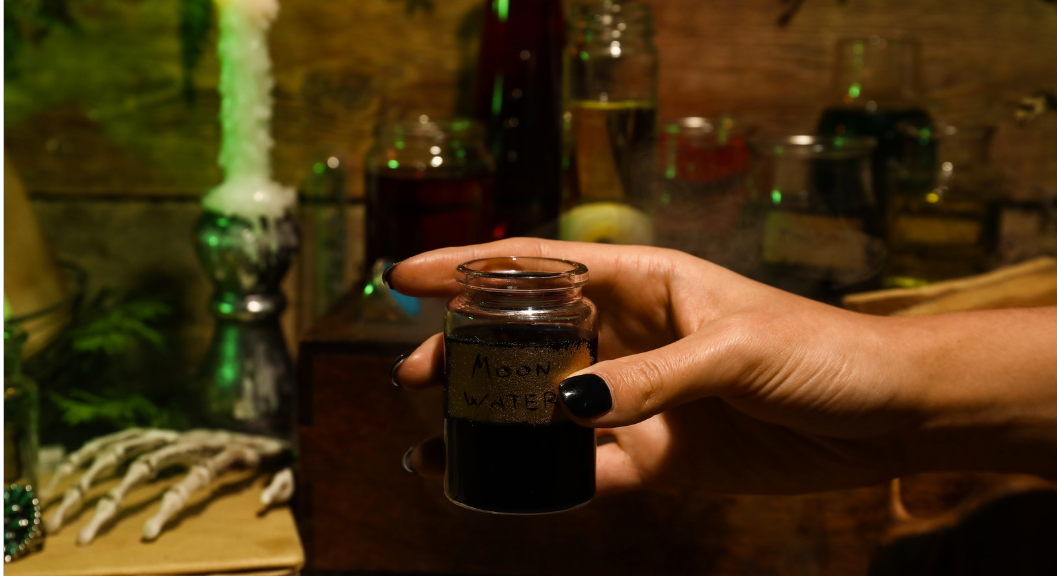
Moon water can be a small, personal way to mark an intention. A closed container beside a handwritten note may remind you to pause before a conversation, notice the sky or return to a promise you made to yourself. You do not need a collection of crystals or an elaborate ceremony to begin.
In this guide, the water is a ritual object for reflection. Keep it separate from your drinking water and other household products. The meaning comes from the practice you choose, while ordinary rules about water and containers still apply.
What people mean by moon water
Moon water usually means water someone has set out during a chosen lunar phase as part of a spiritual practice. Some practitioners describe that as charging the water. Others use the jar as a visible reminder of an intention. These are interpretations, rather than a single recipe or belief that everyone shares.
NASA explains that moonlight is reflected sunlight and that the phase cycle repeats about every 29.5 days. Those astronomical facts do not show that moonlight disinfects water or gives it a special ability to change a relationship. You can value the symbolism without making the water a remedy or a way to direct another person’s feelings.
Give your jar one clear purpose
Before choosing a date, finish this sentence: When I see this jar, I want to remember to… Keep the ending within your own choices. For example, you might want to listen before answering, make time for a quiet moment or write down a question for a reading.
Choose what the water represents to you, such as patience, a fresh start or making room to reflect.
Write a sentence you can return to when you see the closed container.
Choose one ordinary step that makes the intention useful in your life.
I want to communicate kindly might become I will draft my message and read it again before sending it. That gives the ritual a next step without treating a reply from someone else as a test of its power.
Prepare a simple container and a note
Use a small, clean container with a secure lid, plain water and a separate piece of paper. Use a container made for storing water, and follow its cleaning instructions. Do not reuse a bottle that held cleaning products or other chemicals. The CDC’s water-storage guidance explains why container materials, cleanliness and a tight closure matter.
Label the container Ritual water — not for drinking and add the date. Keep the note on the outside or beside the jar. Put decorative stones or symbols next to it rather than in the water. Keep the container where children, pets and anyone who might mistake it for a drink cannot reach it.
You can also use a blue card or a drawing of a jar if water would be inconvenient. A meaningful reminder does not have to create another task for you.
How to make moon water for a personal practice
- Choose your purpose. Write one intention and one action you can choose.
- Prepare the closed container. Add plain water, secure the lid and label it clearly. Leave oils, salt, herbs, glitter and crystals out.
- Choose a stable place. An indoor shelf near a window can be enough. Avoid an exposed ledge, a place where the container might fall or somewhere you would need to climb to reach it.
- Pause with the intention. Read your sentence, look at the sky if you wish and give yourself a quiet moment. You do not need to stay awake for a particular number of hours.
- Close the practice. Put the jar in its chosen safe place, keep it labelled and take the practical step you wrote down.
- Finish using it. When you are done with the reminder, empty and clean the container appropriately. There is no need to leave water, decorations or offerings outdoors.
Choosing a lunar phase without worrying about perfection
You might associate the new moon with choosing an intention, a waxing moon with practising it, a full moon with taking stock or a waning moon with simplifying. These are optional prompts for this practice. They are not rules that determine whether you deserve love or whether a conversation will go well.
If timing matters in your own tradition, use a current lunar calendar and its guidance. You can also choose an evening that fits your life. Clouds, city buildings or a window do not need to become reasons to repeat the ritual until you feel certain that it worked.
Three ways to use the reminder
Before a difficult conversation
Look at the closed jar and read: I can be clear and leave room to listen. Write the main point you want to express and one question you are willing to hear answered. The jar can mark your pause; the conversation still involves two people’s choices.
As part of a reading journal
Place the jar beside your notebook while you write a question. After a reading, separate what was said, how you interpreted it and what you want to check in ordinary life. The guide to understanding a yes-or-no tarot question offers examples that keep your own decisions in view.
In a small personal space
Let it sit beside a note or meaningful object where it can be kept safely. The article on creating a personal altar includes shelf and notebook options. You do not need to pour the water on objects, spray it around a room or add it to a bath to use it as a reminder.
A free intention card to copy
The date and phase I chose: …
What the water represents to me: …
My intention in my own words: …
One action within my control: …
When I will put the jar away: …
This is a notebook exercise. It records your choices; it does not measure lunar energy or predict a result.
Keep ordinary water needs separate
Use your usual safe drinking water for drinking and cooking. Do not drink water from a ritual container or use it in your eyes, on broken skin or in a homemade treatment. Moonlight does not replace established water treatment or local drinking-water advice.
You do not need to preserve a jar indefinitely. If its contents, storage or cleanliness are uncertain, finish the practice by emptying and cleaning the container rather than finding another use for the water. A note can carry your intention after the jar is gone.
A small ritual can be satisfying because it gives a choice a shape you can see. Let the jar remind you of that choice, then give your attention to the life and relationships around it.
Questions readers ask
1. What is moon water?
It is water used as part of a personal lunar ritual. People attach different meanings to it; this guide uses a closed, labelled container as an intention reminder.
2. Do I need a full moon?
No particular phase is required for the personal practice here. If your own tradition has timing guidance, you can follow that and use a current lunar calendar.
3. How long should I leave it out?
This practice has no required number of hours. Choose a manageable quiet moment, keep the container closed and finish without losing sleep over a deadline.
4. Can I make it indoors?
Yes. Choose a stable, accessible indoor place where the container will not be knocked over or mistaken for a drink.
5. Can I add crystals, herbs or essential oils?
Keep them out of the water in this simple practice. A stone, drawing or other meaningful object can sit beside the closed container instead.
6. Can I drink moon water?
Keep ritual water separate from drinking water. Use your usual safe drinking water for drinking and cooking; moonlight does not make unsafe water safe.
7. Can I use it to change someone’s feelings?
The jar cannot determine another person’s choices. Use the intention to guide your own communication, patience, boundaries or other actions.
8. What if the sky is cloudy?
You can still use a personal intention reminder. Cloudy weather does not require you to keep repeating the practice in search of a guaranteed result.
9. How do I finish the ritual?
When you no longer need the reminder, empty and clean the container appropriately and keep your note if it is useful. Do not leave jars or decorations outdoors.
10. What should I do after writing the intention card?
Choose the practical action you recorded, such as drafting a question or making time to listen. Review what you chose without treating another person’s response as proof of lunar power.
I find it fasinating how different zodiac signs might interact with moon water. It raises a question about the mechanisms involved in these astrological practices. Perhaps more interdisciplinary research could shed light on this topic.
This article provides an interesting insight into the benefits of moon water. However, I am skeptical about the efficacy of such practices. The scientific basis behind the claims is not well-established and would require further validation.
Making moon water alot and do feel a positive vibe afterwards. However, it’s difficult to discern whether this is due to the water itself or the intention-setting process involved.
While the article offers a comprehensive guide to creating and using moon water, some of the claims made about its benefits seem overly broad and lack concrete evidence. A more critical examination would be helpful.
The concept of moon water is intriguing, espeshally its purported ability to enhance intuition. I wonder if there are any empirical studies supporting these claims, or if it’s largely anecdotal in nature.