

Wicca is a modern Pagan religion with a range of traditions and individual approaches. Nature, ritual and relationships with the divine are important to many Wiccans, but there is no single organisation that speaks for everyone who uses the name.
If you are beginning to explore it, separate three questions: what a particular community believes, what its members actually practise, and what historians can establish about its development. That makes it easier to understand both the shared language and the differences you will encounter.
Four Terms That Help You Read More Clearly
1. Wicca
A modern religious path or family of related traditions. Ask which tradition a writer or group is describing before treating its teaching as universal.
2. Witchcraft
A broader word with different historical, cultural and contemporary uses. Some people connect it with Wicca; others practise or discuss it outside Wiccan religion.
3. Paganism
A broad category used for several distinct modern religious paths. Wicca is one of them; being Pagan does not automatically mean being Wiccan.
4. Coven
A group of practitioners. Its size, leadership, training and membership arrangements depend on that particular group. The word alone does not establish its credentials or how it treats people.
Terms can overlap in a community’s own usage. The Pagan Federation’s introduction to Witchcraft and Wicca, for example, describes an initiatory approach and acknowledges differences in how the two words are used. Read that as an account of a particular religious context, rather than a rule governing everyone’s identity.
A Modern Religion with Older Influences
Wicca came to public attention in twentieth-century Britain, with Gerald Gardner playing a central role in its development and promotion. It drew on older mythology, folklore, ritual ideas and other influences, while developing new religious forms.
Historical research published by Cambridge University Press examines how Gardner’s community developed its ceremonies and how the eight-sabbat calendar spread. This is more precise than describing Wicca as a single unchanged religion secretly preserved throughout pre-Christian Europe.
A family may pass on practices, and a coven may preserve an initiation lineage. Those are specific claims about a family or group. They do not establish that every Wiccan shares one ancient ancestry, training history or set of rituals.
What Do Wiccans Believe About the Divine?
Many introductions describe a Goddess and a God, sometimes using the imagery of the Triple Goddess and the Horned God. A community may understand its deities as distinct beings, as aspects of a wider divine reality or in another way. Other practitioners place different emphasis on particular deities or symbols.
The Maiden, Mother and Crone are a symbolic pattern found in some descriptions of the Goddess. They are not a requirement that a person follow a particular life course. Similarly, a Horned God image belongs to the religious context in which it is used; its appearance alone does not tell you what a person believes.
Instead of assuming that all groups teach the same theology, ask: “How do you understand the divine here?” A useful answer explains the community’s approach and leaves room for you to ask further questions.
Nature, Seasons and Religious Practice
Nature may be understood as sacred, as a source of spiritual connection or as a setting for observance. That can involve seasonal ceremonies, prayer, meditation, study or care for a local place. A general interest in nature does not, by itself, identify someone’s religion.
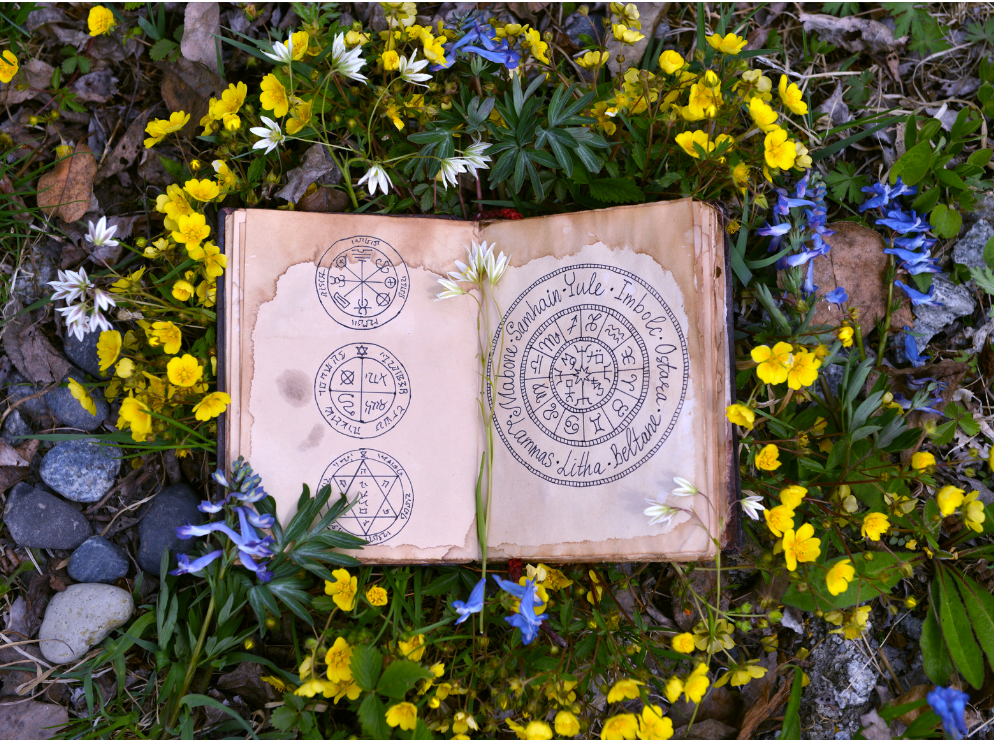
Many Wiccans observe eight seasonal Sabbats, often described through the Wheel of the Year. Lunar observances, frequently called esbats, are another part of some practices. Names, dates and ritual details vary. Our guide to the eight Sabbats explains the seasonal framework and the differences between Northern and Southern Hemisphere calendars.
A religious circle is usually a designated ritual space, not simply a shape that someone draws. A group might prepare that space, welcome participants, pray or meditate, share a reflection, give thanks and close its ceremony. You need the group’s explanation to know what its actions mean.
Ethics: Look at Interpretation and Conduct
The Wiccan Rede and the Threefold Law are ideas you may encounter, but their importance and interpretation differ. The Rede is often discussed as guidance about harm and responsibility. The Threefold Law is a spiritual idea about the return or consequences of actions; it is not a measurable physical law proving that an event will return with triple force.
A statement about kindness is a starting point for a conversation, not proof that every member of a religion behaves well. Ask how a group handles consent, privacy, disagreements and responsibility in practice.
The Pagan Federation’s code of conduct gives one organisation’s concrete expectations about matters including harassment, privacy and spiritual tolerance. Other communities should be able to explain their own expectations and how concerns are addressed.
Keep your own boundaries clear. You can decline an activity, ask what is expected before attending, decide what personal information to share and take time before making a commitment.
Wicca, Magic and Everyday Outcomes
Some Wiccans include magic or spellwork in their religious lives. They may describe it through spiritual forces, intention, symbolism or a combination of ideas. Others put greater emphasis on devotion, observance or community.
An explanation of a belief is different from evidence that a spell will produce a specific result. A ritual does not establish that a person can heal illness, remove a curse, guarantee a job or make someone return to a relationship. There is no reason to assume that a difficult experience proves you failed spiritually or used the wrong amount of energy.
If a ritual helps you name an intention, connect it to an action you can choose: prepare for a conversation, study a subject, repair something you neglected or make time for a valued practice. Keep another person’s decisions separate from what you hope will happen.
Covens, Solitary Practice and Initiation
Gardnerian and Alexandrian are names associated with particular Wiccan traditions. Solitary describes practising independently; it does not automatically identify a tradition, initiation or level of experience. A personal blend of influences should also be described accurately rather than presented as an affiliation you have not received.
In initiatory traditions, joining can involve training and a formal process agreed with the coven. Reading introductory material or performing a personal dedication is not the same as receiving initiation into a particular lineage. You can study without claiming either.
A coven need not have exactly thirteen members, and a dramatic title does not establish someone’s authority over your life. Before joining a group, get clear answers about its teaching, leadership, participation requirements and how membership can end.
Questions to Ask Before Joining a Community
- What tradition do you practise? Ask how the group describes its history, training and affiliations.
- What happens at an introductory meeting? Find out what is public, what is private and which activities are optional.
- What time and costs are involved? Ask for clear information before agreeing to study, attend or buy anything.
- How are consent and privacy handled? Ask about photographs, personal information, physical contact and the right to decline.
- Who can hear a concern? Look for a clear way to raise a problem and an understandable process for responding.
- Can I take time to decide? Learning about a religion need not become an immediate commitment.
You can also begin with a notebook. Record the author, tradition and context of a source, then separate its historical claims, religious teachings and personal opinions. Compare explanations without assuming that a confident tone makes one account speak for everyone.
Begin with Understanding, Not a Shopping List
Altars, candles, chalices, wands and other objects may have a place in a particular practice. Owning a collection does not make someone Wiccan, and you do not need to purchase unfamiliar tools to read, ask questions or observe local seasonal change.
For a wider introduction to different interests and ways of practising, see beginner witchcraft practices and first steps. If you are considering how to describe your interests, the guide to choosing words for your practice can help you distinguish an interest from a formal affiliation.
You can remain curious while deciding what you believe. Understanding a tradition’s history, the meaning of its rituals and the conduct of an actual community is more useful than rushing to adopt a title.
Frequently Asked Questions
1. Is Wicca the same as witchcraft?
The words overlap in some communities, but they are not interchangeable in every setting. Wicca is a modern religious path or family of traditions. Witchcraft has broader historical, cultural and contemporary uses, including outside Wiccan religion.
2. Is Wicca an unchanged ancient religion?
Wicca developed in its modern form in twentieth-century Britain while drawing on older influences. A specific family or group may preserve its own practices or lineage, but that does not establish one unchanged religion followed throughout ancient Europe.
3. Do all Wiccans worship the same deities?
No single description covers every approach. Many introductions discuss a Goddess and a God, while particular communities and individuals may understand or emphasise divinity differently. Ask which tradition a source is describing.
4. Do all Wiccans interpret the Threefold Law literally?
No. Its importance and interpretation vary. Treat it as a spiritual teaching found in some Wiccan contexts, not a demonstrated physical law or proof that an event must return with triple force.
5. Does a coven always have thirteen members?
No fixed membership number defines every coven. Size, leadership and training depend on the group. Ask how a particular coven operates rather than inferring its credentials from its name or the number of members.
6. Is personal dedication the same as initiation?
A personal dedication can mark an individual decision, but it is not the same as receiving initiation into a particular tradition or lineage. Describe what you have actually studied or received, and check the requirements of the community involved.
7. Do I need ritual tools before I start learning?
No. You can begin by reading, comparing sources, keeping notes and asking questions. Learn an object’s purpose before deciding whether it belongs in your practice. A collection of tools does not establish religious affiliation or experience.
8. Can I explore Wicca without joining a coven?
Yes. You can learn about its history and different traditions without making an immediate commitment. Some people practise independently, while initiatory traditions have their own membership processes. Take time to understand the approach you are considering.
The article provides a detailed overview of Wicca that dispels many common misconceptions. It’s interesting to see how nature-centric and positive the practice actually is.
It’s commendable how Wicca promotes environmental sustainability and respect for nature; something modern societies should definitely take a leaf from.
I find Wiccan practices intriguing, particularly their emphasis on nature and balance. However, t question is whether modern interpretations differ significantly from historic ones?
While the article does a good job of explaining the basics of Wicca, it seems there might be oversimplification in certain aspects, for example the role of gods and goddesses
I agree with Maria. There is much more depth to the deities in Wicca than what’s briefly mentioned.
Yes, the portrayal of the gods and goddesses could be explored more thoroughly to provide a complete picture.
The piece on the Wiccan Rede is enlightening. The principle of ‘Harm None’ is a universal value that many other religious affiliations could also appreciate and benefit from.