

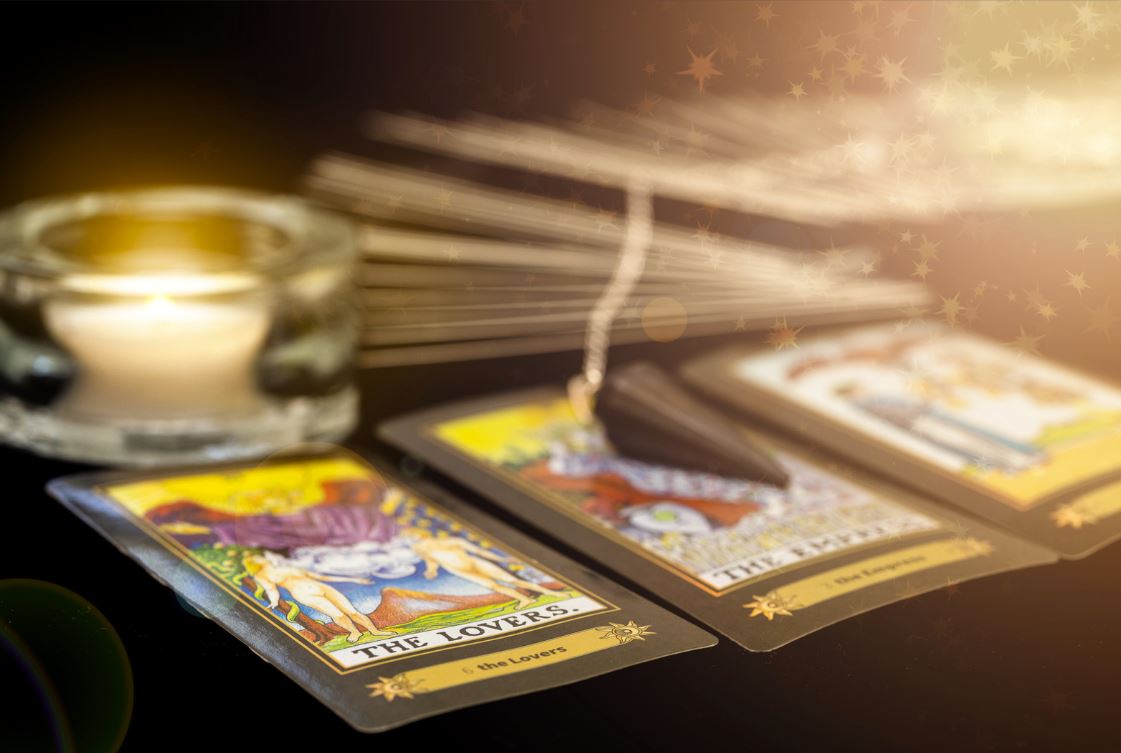
A yes-or-no question often carries a much bigger feeling: Should I reach out? Can I trust this connection? Am I ready for a change? Tarot can give that feeling a symbolic language. A card becomes more useful when you understand what you are asking it to help you explore.
If a simple answer is what you want, decide how you will read the cards before drawing. Then leave room for the facts, your own judgement and the other people involved. A favourable card cannot promise a reply, and a difficult card does not remove your choices.
Why yes-or-no lists disagree
Readers use different systems. One may treat an upright card as an encouraging answer; another may focus on its imagery, suit or position. Some use reversals, some do not, and some avoid binary readings altogether. There is no single yes-or-no key that every deck or tradition follows.
That is why memorising a long list can become confusing. A card associated with affection may still invite a difficult conversation. A card associated with endings may point you towards leaving an unhelpful habit. The meaning needs the question and the reading method around it.
If your deck comes with a guidebook, begin there. Note which system you are learning and keep its definitions together. You can compare another approach later without changing the rules halfway through a reading.
Read a card in three layers
Describe an object, gesture, expression or relationship between figures. Begin with what you can actually see.
Use the deck’s guide and your own response. Write the interpretation as a possibility, rather than as an established fact.
Choose a question to explore or an action within your control. Identify anything that needs evidence from outside the reading.
For example, you might notice two figures facing each other and think about mutual attention. That can prompt you to ask whether both people have room to speak. It does not establish what an absent person feels.
Three cards that need more than a yes or no
The Lovers: look at the connection itself
The title can make this card feel like an automatic romantic confirmation. Instead, examine the relationship in the picture and the kind of connection you are asking about. In a personal reading, you might explore affection, openness or the values you bring to a relationship. Whether someone wants a date still needs their own freely given answer.
Strength: consider your approach
The woman and lion in the Rider–Waite–Smith image give you something more specific to explore than “make a wish.” Notice the relationship between gentleness and power. A practical question could be: How can I handle this conversation firmly without trying to control the other person?
Death: give change a name
A frightening title can pull attention away from the whole image. Waite’s discussion of the Death card includes change, transformation and renewal. In a reflective reading, ask what is ending, what needs to change and what support that transition might require. Drawing the card is not evidence that someone will die.
These are starting points for the Rider–Waite–Smith tradition, not definitions for every deck. The original Pictorial Key to the Tarot is one historical interpretation to study alongside your own deck’s instructions. Its spiritual claims should be understood in their historical context.
Keep the court cards unless your chosen method says otherwise
Pages, Knights, Queens and Kings belong to a standard tarot deck. You do not need to remove them simply because you want a short reading. A court card can be explored as a role, an approach or a quality of attention rather than as a literal description of another person.
For instance, a Page may give you a way to think about learning or approaching something with curiosity. That is a prompt to consider, not a rule that every Page means yes. Choose the method first, including how you will handle a court card or reversal, and keep that method consistent.
Try a one-card reading with a useful stopping point
Give yourself an uncluttered place to read and a notebook for your question. If you enjoy a dedicated spiritual space, a small personal altar can be one option; an ordinary desk works too.
- Frame the question. Ask about an action, approach or issue you can explore.
- Choose the method. Decide whether you are using reversals and which guide will inform the reading.
- Shuffle and draw one card. Describe the image before deciding what it means.
- Write one interpretation and one alternative. Notice where your hopes or fears may be shaping the answer.
- Choose a next step. A conversation, a pause or more information may be more useful than another draw.
Agree on your stopping point in advance. If you keep redrawing until a card feels reassuring, put the deck aside and return to the question in ordinary words. You can value the practice without asking it to settle every uncertainty.
Free tool: give your tarot question a clearer focus
Choose a topic and the part that concerns you. This tool suggests a reflective question and a practical next step. It does not draw cards or provide a psychic reading.
Your selections stay on this page and are not saved or sent anywhere.
Separate a reading from a fact you need to verify
Before acting, ask what the reading cannot tell you. A card cannot establish infidelity, consent, a diagnosis or an account balance. If you are worried about a relationship, identify the behaviour you observed and the conversation or boundary you need. You do not have to turn a symbol into an accusation.
You can also bring this distinction to a reading with a professional: ask how they interpret the card, what alternatives they see and what remains yours to decide. Keep room to disagree. A useful conversation should not make you feel dependent on repeated readings for permission to live your life.
Finish by writing a small, realistic action. I will draft an honest message and decide tomorrow whether to send it is more workable than The card says they must return. The first gives you a choice you can review.
Questions readers ask
1. Can tarot give a yes-or-no answer?
Some readers use yes-or-no methods, while others prefer open questions. Treat the answer as part of a chosen interpretive practice, not as verified knowledge of the future.
2. Is there one correct yes-or-no meaning for every card?
No single list is shared by every reader, tradition and deck. Choose a method and guide before the draw, and note which approach you are using.
3. Should I remove the court cards?
Only if the particular method you have chosen calls for it. Pages, Knights, Queens and Kings are part of a standard tarot deck and can be read as roles or qualities to explore.
4. Does The Lovers mean someone loves me?
It can invite reflection on connection, but it cannot establish another person’s feelings or consent. Their own words, choices and behaviour matter.
5. Does Death predict a physical death?
Drawing the card does not establish that someone will die. In reflective practice, its imagery can open questions about endings, change and renewal.
6. Do reversed cards always mean no?
No. Readers interpret reversals differently, and some do not use them. Decide how you will handle reversals before beginning.
7. What if a card does not seem to fit?
Describe its imagery, check your deck’s guide and consider another possible interpretation. You can leave the meaning unresolved instead of forcing an answer.
8. Should I keep drawing until I feel reassured?
Choose a stopping point before you begin. If repeated draws are increasing uncertainty, put the deck away and return to the practical question or seek support from someone you trust.
9. Can cards prove that a partner is cheating?
No. A card is not evidence of infidelity. Distinguish what you observed from what you fear, and consider an appropriate conversation, boundary or source of support.
10. What does the free question tool do?
It uses the topic and uncertainty you select to suggest a reflective question and a practical next step. It does not draw a card, read another person’s mind or predict an outcome.
This article provides a comprehensive overview of how to conduct a yes or no tarot reading. It’s interesting to see the specific cards associated with ‘yes’ and ‘no’ answers.
While the article explains the process well, it should emphasize more on how to interpret the cards’ meanings deeply. just drawing cards without proper interpretation doesn’t really helps.
The breakdown of ‘Yes’ and ‘No’ cards is quite helpful for beginners. However, it’s crucial to remember that tarot readings are subjective, and the personal intuition of the reader plays a significant role on the outcomes.
Using a one card spread seems simple and straight forward, but I believe more context around the surrounding cards and the situation in question is necessary for a thorough reading.
It’s good to know that tarot readings can provide quick answers, but its important to approach them with caution. One should not rely entirely on these readings for major decisions or mental health issues.