


Wanting to end a relationship kindly can leave you searching for words that will make the hurt disappear. You might also hope to remain friends. A private card ritual can give you a moment to prepare, but it cannot make the other person feel the same way, deliver the decision for you or guarantee a painless ending.
Begin by separating three questions: whether you want the romantic relationship to continue, what practical arrangements need attention, and what contact either person wants afterwards. A clear answer to one does not settle the others.
Decide what you are actually saying
“I want us to talk about a problem,” “I need some time to decide,” and “I have decided to end our relationship” communicate different things. Use the one you mean. If your decision is final, a vague promise to try again later can leave the other person waiting for something you do not intend.
Where it is safe to communicate directly, prepare a short statement in your own words. For example: “I have decided that I do not want to continue our romantic relationship. I know this may hurt. I would like to make a separate plan for returning our belongings.” You can acknowledge a reaction without turning the decision into a debate you must win.
The Massachusetts Department of Public Health’s respectful-breakup guide for young people offers examples of direct communication and boundaries before, during and after a breakup. Shared housing, parenting, legal or financial commitments can require additional practical planning and appropriate professional advice.
A returned charger is not a promise of friendship
In this fictional example, Ellis ends a romantic relationship with Dev. They agree that a mutual friend can return Dev’s charger. Dev hopes they will keep meeting for coffee; Ellis wants distance. The charger can be returned as agreed while Ellis declines the invitation. That practical agreement does not revive the romance or commit either person to friendship.
| Question | What can be clear | A useful next step |
|---|---|---|
| Am I continuing the romance? | Your own decision and the words you use to communicate it. | Prepare an honest statement rather than a hint or test. |
| What needs arranging? | A specific agreement about an item or responsibility. | Name the practical task and agree an appropriate way to handle it. |
| Will we remain friends? | What contact you want; the other person has a separate choice. | Respect distance or a declined invitation without treating it as a failed ending. |
An optional card ritual for your own preparation
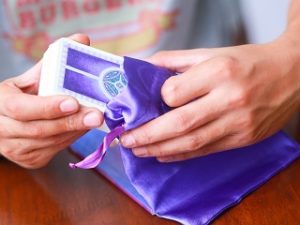
Use three ordinary playing cards or slips of paper as labels. The cards do not need traditional meanings: choose your own words for My decision, Practical arrangements and Future contact. No purchase, particular suit or prediction is required.
- Set out the three labels. Choose a quiet place where you can write privately. Leave another person’s photographs, belongings and private information out of the exercise.
- Name your decision. Under the first card, write one sentence saying whether you have decided to leave or are still considering what you want.
- Name one practical task. Under the second card, write a specific question to arrange, such as how an agreed return of belongings could happen.
- Name your contact boundary. Under the third card, write what contact you want now. Leave room for the other person to decline friendship or request distance too.
- Put the cards away and take one appropriate step. Prepare the conversation, ask for practical help or seek confidential support. The reflection is complete when it has helped you identify an action; you do not need to repeat it until someone’s feelings change.
This version uses no flame. If light feels meaningful, an ordinary lamp or battery-operated candle is enough. The U.S. Fire Administration’s candle guidance recommends considering flameless candles.
Leave friendship as a separate, voluntary possibility
Remaining friends is a hope you can discuss, not a condition the other person must accept to prove the breakup went well. Either of you may need distance or may not want friendship at all. Avoid offering daily contact out of guilt when you already know you cannot sustain it.
You might say, in your own words, that you will not be available for personal messages while you adjust, or that any necessary practical contact should use an agreed channel. A boundary is more useful when it describes what you will do. Do not recruit shared friends to persuade someone to stay close or provide updates about them.
If uncertainty keeps pulling you into checking or rehearsing, the guide to letting go of what you cannot control offers a simple way to separate your next action from another person’s answer.
If direct contact could be unsafe
If you fear threats, coercion or a dangerous reaction, seek confidential specialist support before deciding how to communicate or exchange belongings. An in-person meeting is not something you owe as proof of kindness. Use urgent local help if there is immediate danger.
The NHS guidance on leaving an unhealthy relationship links to practical help and domestic-abuse support. A card exercise cannot replace planning that fits your circumstances.
For the broader question of what people call a breakup spell, including the difference between your own decision and trying to separate someone else’s relationship, read breakup spells, beliefs and boundaries.
Questions about ending a relationship and the card ritual
1. Can a ritual end the relationship for me?
A private ritual can help you name your own decision, but it does not tell the other person what you have decided. Use an appropriate way to communicate and plan practical arrangements. If direct contact could put you at risk, seek confidential specialist support first.
2. Does the other person have to agree with the breakup?
You do not have to persuade someone to want the same ending before saying that you no longer want a romantic relationship. Shared commitments and practical arrangements may still need discussion or appropriate professional advice.
3. Can I guarantee that we will stay friends?
No. Friendship after a breakup needs both people’s willingness. Either person can want distance, decline friendship or change what contact feels comfortable. Returning belongings or being polite does not create an agreement to stay close.
4. What if I am still deciding whether to leave?
Name the uncertainty honestly. A request to discuss a problem or a temporary pause is different from a final breakup. Use the reflection to clarify what you mean rather than giving a final-sounding message you do not intend.
5. Do the cards have to be the two of spades and four of diamonds?
No. In this exercise the cards are personal labels for decisions, practical arrangements and future contact. Any ordinary cards or slips of paper can serve that purpose; no card predicts another person’s response.
6. How many weeks does this ritual take to work?
There is no reliable countdown from a card ritual to a breakup or a friendship. Review your own next action when there is new information or a practical need, rather than waiting for someone’s feelings to cool on a schedule.
7. Should I meet in person to end things?
Choose a way to communicate that fits your circumstances and safety. If you fear threats, coercion or an unsafe reaction, speak with a confidential support service before arranging contact. A face-to-face meeting is not a test of whether you are being considerate.
8. What if we still need to exchange belongings?
Keep the arrangement specific: which items, what agreed method and who needs to be involved. Do not treat an exchange as an invitation to restart the relationship. Get appropriate help where shared responsibilities or safety make the arrangements complicated.
I have to wonder about the psychological impact of performing this ritual daily. Does it aid in closure, or merely prolong the emotional turmoil? The ritual may be an attempt at mindful detachment, yet its practical merits remain questionable.
While the intent behind the spell seems benign, I can’t help but feel that such rituals can create a false sense of security. Ending a relationship is complex and multi-faceted, and relying on a spell might oversimplify the process.
That’s a fair point, Ashleigh. However, for some, such rituals might offer a structured way to cope with emotional distress, even if the effectiveness is more about personal belief than actual results.
The use of symbolism in the card selections is interesting, but I am skeptical about the efficacy of such rituals in ending relationships amicably.
This spell seems unconventionale but may offer comfort those struggling to end things gracefully. The repetition may serve as a meditative practice to aid emotional processing.
Indeed, Bubble Butt. The repetition and symbolism could act as a mental rehearsal, allowing individuals to mentally prepare for the inevitable, even if the ritual itself holds no real power.
The ritual described appears to be more of a psychological tool rather than a magical one. It relies on repetition and symbolism to instill a sense of closure and resolution. Its advantages may be more about mental preparation than actual magical intervention.
Comments are closed.