

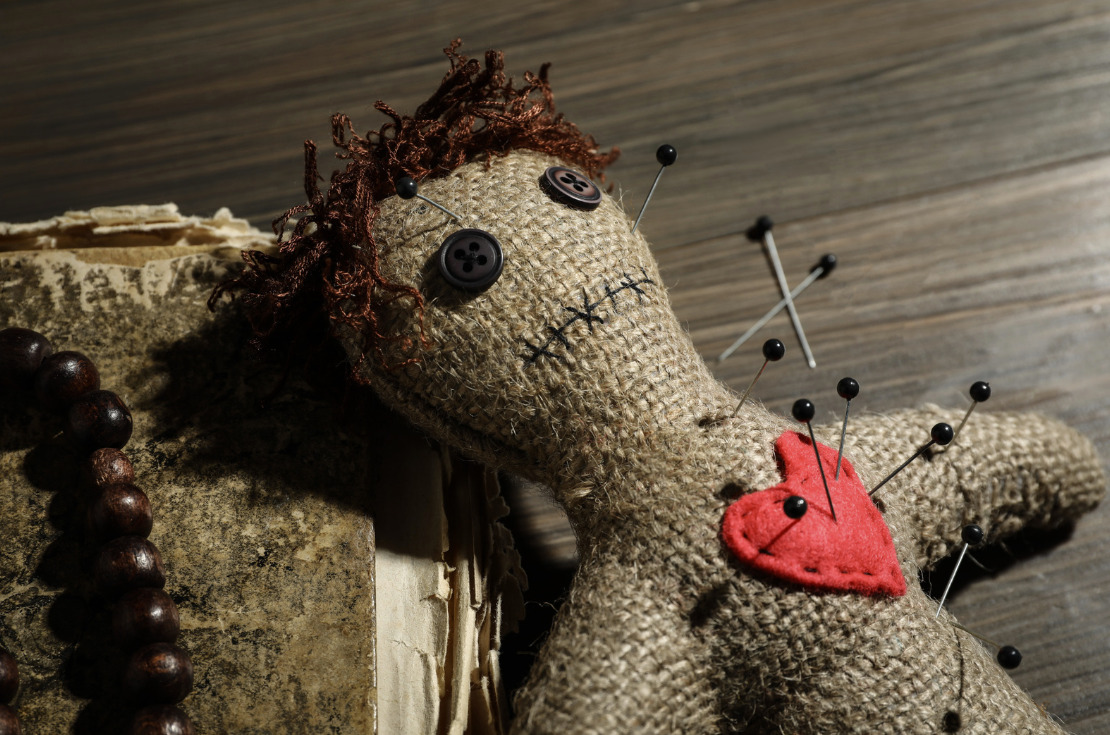
Searching for “Voodoo love spells” can lead to religious explanations, shop products and instructions that promise to change someone’s feelings. Those pages may use similar words while describing very different activities. Before doing anything, identify what tradition the page means, what action it asks you to take and whose choice it claims to affect.
A wish for love is understandable. It does not make a recipe authoritative, give permission to use another person’s belongings or establish that a former partner will return. You can take an interest in a religious tradition while keeping a separate, honest account of your relationship situation.
Begin with Vodou as a religion, not a movie device
The Harvard Pluralism Project’s overview of Vodou describes Haitian religious traditions shaped by Fon, Kongo and Yoruba African traditions and French Catholicism. It discusses serving spirits, community ceremonies, teaching and initiation. That setting is much wider than a doll, a potion or a request for romance.
The overview also describes Haitian communities in the United States. A practice can have a local history and a living community; it need not be a fixed set of instructions shared by everyone who uses a similar name. Ask which community or teaching a page is describing. The label “Voodoo” alone does not answer that question.
Four terms to read in context
| Term | Context in the overview | What the word does not establish |
|---|---|---|
| Vodou | A name for Haitian religious traditions. | That an online recipe represents every practitioner. |
| Lwa | Spirits served within the tradition. | A guaranteed route to someone else’s affection. |
| Oungan | A priest. | The qualifications of a person using the title online. |
| Manbo | A priestess. | That a paid promise of reunion will be fulfilled. |
This vocabulary is a starting point. It does not confer a religious role or replace teaching. A respectful introductory question is, “What is appropriate for a newcomer to learn, and who would guide that learning?” Accept that some teachings or ceremonies may not be open to you.
Separate the teaching, the action and the romantic promise
A page might name a spirit, instruct you to tie two figures together and promise lasting devotion. Read those as three separate claims. A named religious reference needs context. The handling of materials needs practical judgment. The promise about another person needs evidence of their freely expressed choice.
Calling an activity natural, traditional or positive does not make every action safe or consensual. Nor does calling a religion “dark” explain its teachings. Evaluate the specific instructions without using a frightening label to describe a whole community.
Example 1: a religious name attached to a shopping list
A page lists a candle, colored string and two dolls, then says the recipe is universally required. The list itself does not establish that claim. Look for an identified tradition and the context of the teaching. If the page cannot explain them, keep the recipe separate from what you have learned about the religion.
Example 2: a private wish presented as someone else’s agreement
A seller says your former partner has hidden feelings and asks you to place a treated object where they will touch it. Their claim cannot speak for that person, and the instruction creates an unwanted physical interaction. Leave out that action and follow the person’s actual boundary about contact.
A learning route before you decide to participate
- Write your question accurately. “I want to learn about Haitian Vodou” differs from “I want my ex to return.” You may have both wishes, but one does not answer the other.
- Identify the context. Note who is speaking, the community or tradition they identify and whether the page is an introduction, personal account or service advertisement.
- Ask about the actual activity. If participation is offered, clarify what you would do, who would guide it, what materials are involved and whether you may decline or stop.
- Make a separate relationship decision. Base contact on what is welcome now. Keep learning or private reflection independent of any hoped-for reply, proposal or reunion.
You do not need to buy a kit to complete these steps. You also do not have to prove sincerity by withholding questions or cutting off trusted support. Respecting the privacy of religious teachings is different from being pressured to keep a troubling commercial demand secret.
A fictional example: two questions on one page
In this fictional example, Bea reads about a spirit after a breakup and writes, “Will this bring Ellis back?” Ellis has asked for distance. Bea divides a page into “What I want to learn” and “What I know about contact.” Under the first, Bea notes a question about the tradition. Under the second, Bea records Ellis’s request without adding an assumed hidden feeling.
Bea can read a cultural introduction or ask a willing community member an introductory question. Bea does not put an object near Ellis, borrow a photograph or send a message disguised as spiritual work. Learning remains possible while the relationship boundary remains in place. This is an ordinary note-taking example, not a Vodou ritual.
Keep materials, privacy and money concrete
Do not put unknown oils, powders, herbs or other mixtures in food or drink, on another person’s skin or where they will unknowingly handle them. Leave hair, nail clippings and private belongings out of a personal reflection. Returning a package “to nature” can also mean leaving waste in land or water; dispose of ordinary materials appropriately instead.
For a simple moment to think, a pen and paper are enough. If you use a real candle, keep it away from anything that can burn and extinguish it before leaving the room or sleeping. The U.S. Fire Administration’s candle guidance recommends a stable holder and at least 12 inches, about 30 centimetres, of clearance from combustible items. Burning a doll, feather, photograph or paper is unnecessary for this learning exercise.
Before paying anyone, get the actual service, total price, currency, further charges and cancellation terms in writing. A clear description of the service is different from a guaranteed result. The Canadian Anti-Fraud Centre’s guidance on psychic fraud describes demands connected with promised help or removal of a curse. Save messages and payment records if you suspect deception; do not pay more because someone threatens a consequence.
Choose a next step that does not require controlling someone
If the underlying wish is reunion, read about reconciliation, closure and a mutually chosen return. If a couple already wants a shared activity, consent-based love rituals discusses how to choose or decline one. For evaluating promises, the explanation of how love-spell claims connect actions and results keeps observed behavior separate from assumptions.
Religious learning, a meaningful private practice and a relationship decision can each matter. Keep their purposes clear so that none becomes an excuse to override another person’s answer.
Questions about Voodoo love-spell instructions
1. Is Vodou just another name for love magic?
No. Haitian Vodou is a religious tradition with African roots and a history shaped in Haiti. A love-spell recipe is not a complete account of its beliefs, community life or religious practice.
2. Why does this article use both “Voodoo” and “Vodou”?
“Voodoo” appears in the article’s established title and is common in searches. “Vodou” is used here when discussing the Haitian religious tradition described by the Pluralism Project. Ask a community how it names its own practice rather than assuming every use of a similar word means the same thing.
3. Can a recipe tell me whether someone is qualified to lead a ceremony?
No. A list of ingredients, a title on a sales page or an impressive photograph does not establish training, initiation or a relationship with a religious community. Ask about the specific teaching and role without demanding access to private teachings.
4. Can a love spell guarantee that someone returns or marries me?
No reliable guarantee of another person’s romantic choice follows from a ritual, offering or paid service. Their actual willingness to talk or enter a relationship is a separate question. A past relationship does not supply current consent.
5. Should I hide an object where another person will touch it?
Do not arrange secret contact with feathers, oils, powders or other materials. Do not take belongings, hair or private information to use in a ritual. If an activity involves another person, discuss the actual activity and obtain their willing agreement.
6. Does a doll have power over the person it represents?
Making or handling a figure does not establish control over another person’s feelings. If you make a symbolic object for your own reflection, keep its meaning about your choices. Do not use it as a threat or treat damage to it as evidence that someone else will be harmed.
7. What if a seller says I must keep paying or something bad will happen?
Pause further payments and seek independent advice. Save the offer, messages and payment records. A threat tied to payment is a concrete concern; you do not need to settle a supernatural claim before seeking help or reporting suspected fraud.
8. Can I learn about Vodou without attempting a ceremony?
Yes. Begin with contextual reading and ask whether a community welcomes introductory questions or public events. Learning does not require buying a love service, targeting another person or claiming a religious role you have not been given.
The emphasis on love spells might overshadow the broader applications and cultural significance of Voodoo. A more inclusive portrayal of its practices would be more enlightening.
I agree with Gumdrop; Voodoo is a rich and complex tradition with applications beyond just love. Highlighting its multifaceted nature would provide a better understanding of its importance.
Indeed, focusing solely on love spells can lead to a narrow perception of Voodoo. More information on its healing practices and spiritual guidance would be beneficial.
The article provides an overview of Voodoo, but does not delve deeply into the historical and cultural contexts. Understanding the significance of Lwa requires a more nuanced approach. Additionally, the ethics and potential consequences of using such spells should be considered more thoroughly.
While the post was informative, there is a lack of critical analysis on the misuse of Voodoo in media portrayals. The article could benefit from examining how these misconceptions perpetuate stigmatization against practitioners.
It’s helpful to learn about the different spirits and their roles, but the article seems to oversimplfy the process of casting Voodoo spells. There are many layers to Voodoo practice that require respecrful engagement and deep understanding.
Interesting read– though I’d appreciate more academic references to substantiate the information presented. There’s a lot to explore about the syncretic nature of Voodoo and its impact on diverse cultures both in Africa and the diaspora.