

A Ganesha mantra can be part of a Hindu devotional practice: a way to offer respect, seek blessings and begin something with attention. Understanding the prayer matters more than collecting an ever-longer list of sounds. Start with its meaning, the tradition teaching it and the place it will have in your life.
For devotees, a successful practice may involve care in learning, regular worship or remembering the qualities they honour in Ganesha. It does not give anyone a reliable promise of money, an obstacle-free life or control over another person. You can value devotion while taking the practical steps your situation requires.
Who is Ganesha in this devotional setting?
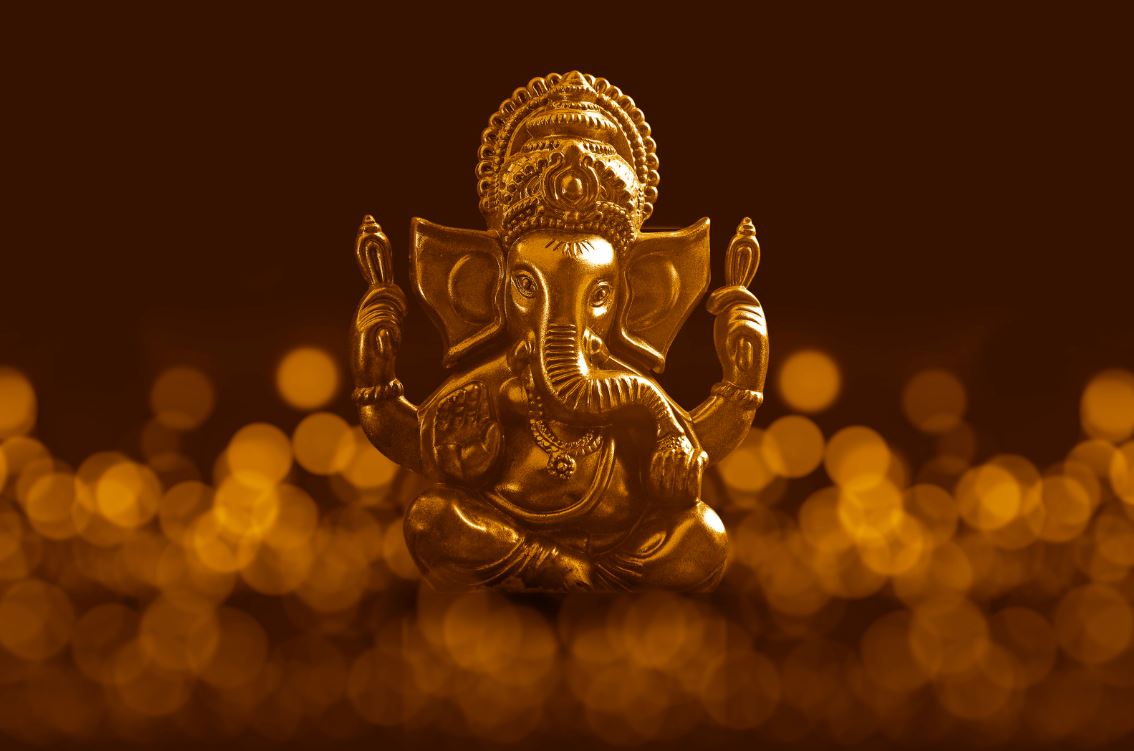
Ganesha, also called Ganesh or Ganapati, is the elephant-headed deity whom many Hindus honour as a remover of obstacles and a patron of wisdom and new beginnings. Religious stories identify him as the son of Shiva and Parvati. These are teachings and devotional meanings, rather than a scientific explanation of how events unfold.
Garima Borwankar’s Siddha Yoga exposition on Lord Ganesh explains these associations and the practice of invoking him before an undertaking. Hindu communities have their own customs and interpretations. Learn from the community or teacher whose practice you are following, rather than assuming one online routine represents everyone.
Three prayers and what they ask
The familiar Romanized spellings below make the prayers easier to identify. They do not replace instruction in Sanskrit pronunciation. The short Ganapati mantra and the Gayatri form appear in the Ganapati Atharvashirsha published with recitation and translation by the Siddha Yoga tradition; the new-beginnings exposition also presents the Vakratunda prayer.
1. Om Gam Ganapataye Namah
Om Gam Ganapataye Namah
This is a salutation to Ganapati. In the text, Gam is explained as Ganesha’s seed syllable. Om and Gam have sacred significance; treating them as ordinary English words with a mechanical effect misses their devotional context.
A question to bring: What quality do I want to remember as I begin—attention, humility or willingness to learn?
2. Vakratunda Mahakaya
Vakratunda Mahakaya
Surya Koti Samaprabha
Nirvighnam Kuru Me Deva
Sarva Karyeshu Sarvada
The verse addresses Ganesha through his curved trunk and radiant form, then asks for his blessing on one’s undertakings. Asking for freedom from obstacles is an expression of prayer. It does not establish that every difficulty will disappear.
A question to bring: Which part of this undertaking needs preparation or help from me?
3. The Ganesha Gayatri
Eka Dantaya Vidmahe
Vakratundaya Dhimahi
Tan No Dantih Prachodayat
This prayer invokes the single-tusked Ganesha and contemplation of his form. The passage is presented here in its Hindu Ganapati Atharvashirsha context. Its spiritual request concerns understanding and contemplation, rather than a prediction about an exam, a relationship or a bank balance.
A question to bring: What do I want to understand more carefully before I act?
Learn a practice you can understand
Listen to a teacher or a community’s own recitation, follow the text and ask about unfamiliar syllables. Different Romanized spellings may represent the same Sanskrit sounds, while some longer prayers belong to particular teaching traditions. A long string of syllables is not automatically more suitable or more powerful for a beginner.
If you already follow a tradition with a particular count, preparation or puja practice, use its guidance. This article does not assign a universal repetition count or require a purchase. You can first read a prayer’s meaning and decide whether this is a practice you want to learn respectfully.
For general ideas about arranging a quiet place, our guide to a meaningful home altar offers practical starting points. Follow your own Hindu community’s guidance for puja, sacred images and offerings.
An optional beginning: prayer, reflection and action
- Choose one prayer. Read its meaning and identify the source you are learning from. Leave unfamiliar longer forms for further study.
- Make room to attend. Sit or stand comfortably somewhere you can pause without interruption. No smoke, flame or special object is needed for this introductory exercise.
- Read or recite comfortably. Follow the text at an unhurried pace. Avoid forcing your voice or breath. Stop if you want to; you do not need to produce an unusual sensation.
- Name a practical step. Connect your intention with something you can choose: prepare your notes, ask a question, check an arrangement or seek appropriate help.
- Leave room for an unknown result. Notice what you actually did and what remains unsettled. Feeling reassured does not verify that an external outcome has changed.
A beginning before a difficult presentation
Devika is a fictional adult preparing a course presentation. Ganesha devotion is already part of her family practice. She chooses a familiar short prayer before returning to her notes. The example keeps her worship, her preparation and the eventual result separate.
- 1. The intention
- Devika wants to begin with care and communicate clearly. Her prayer expresses that wish; it does not supply a grade or promise that everyone will agree with her.
- 2. The obstacle she can address
- She has not checked whether her slides open on the classroom equipment. She tests the file in the way her course permits and asks the instructor about anything still uncertain.
- 3. The action she chooses
- She practises explaining her main point in ordinary words and marks a place where she needs to verify a source. If an answer is missing, she leaves it marked rather than inventing one.
- 4. What remains open
- The presentation and assessment have not happened yet. Devika can review her preparation afterward without treating a good result as proof of a mantra’s predictive power or a difficulty as evidence of failed devotion.
Adapt the example: name your intention, identify an actual task and choose one step you can take. You do not need to turn worship into a performance test. For more help separating your actions from an outcome you cannot settle, read letting go of what you cannot control.
Keep devotion separate from promises sold to you
Someone promising guaranteed debt removal, a certain exam result or another person’s affection is making a claim beyond the prayer’s devotional meaning. Be cautious about escalating fees, threats of spiritual punishment or demands that you ignore ordinary responsibilities. You can decline a paid service without abandoning your faith.
A relationship still needs consent and participation. A bill still needs a practical response. Let a prayer support the way you want to approach life while leaving room for effort, help, other people’s freedom and events you cannot direct.
Questions about Ganesha mantras
1. What does Om Gam Ganapataye Namah mean?
It is a salutation to Ganapati, another name for Ganesha. Om and Gam are sacred syllables in the prayer. Its meaning belongs to a devotional setting; it is not a formula for predicting a result.
2. Is the Ganesha Gayatri a Buddhist mantra?
The Ganesha Gayatri discussed here appears in the Ganapati Atharvashirsha, a Hindu devotional text. Ganesha also appears in other religious settings, so identify the particular text and tradition instead of applying one label to every prayer.
3. Must I repeat a mantra 108 times?
Follow the count and practice taught in your own tradition when relevant. This introductory guide does not prescribe a count. A number of repetitions does not guarantee wealth, exam results or another person’s response.
4. Do I need an expensive altar or offering?
Ask your own community about its puja practices. For the optional reading-and-reflection exercise here, a comfortable place and the text are enough. Buying more objects does not establish greater devotion or a promised result.
5. What if I cannot pronounce the Sanskrit confidently?
Use a reliable text and listen to a qualified teacher or a tradition’s own recitation. Learn a short passage gradually and ask about unfamiliar sounds. Romanized spellings help you identify the words but do not capture every pronunciation detail.
6. Can a mantra clear a debt or make someone love me?
A prayer may express a spiritual hope, but it does not settle a debt or determine another person’s feelings. Take the practical action the situation needs and respect other people’s choices. Avoid anyone who demands escalating payments for a guaranteed result.
The mantra descriptions seem somewhat repetitive, and it’s hard to discern the subtle differences between them. Also, the syntax could use some improvement for better clarity and understanding. The article does provide a good overview of Ganesha’s significance, though.
It is interesting how Ganesha, as a deity, represents multiple concepts such as intelligence and overcoming obstacles. The versatility of these mantras, in offering various benefits from financial aid to personal growth, is quite remarkable. However, the cultural context is vast and complex.
The explanations given for each mantra are thorough, but I wonder about their applicability in a more secular, contemporary context. The benefits like leadership traits and personal well-being are universally desired, but the religious aspect is very niche.
Reading about the different mantras is quite enlightening. The Vakratunda Ganesh Mantra’s emphasis on obstacle removal and success is particularly appealing. It’s also notable that these chants are tied strongly to religious and spiritual practices.
These chants offer a fascinating glimpse into Hindu spiritual practices. The focus on positivity and removing obstacles is universal. Yet, the article could benefit from more structured formatting and fewer grammatical errors. The potential benefits of these mantras are well articulated.