

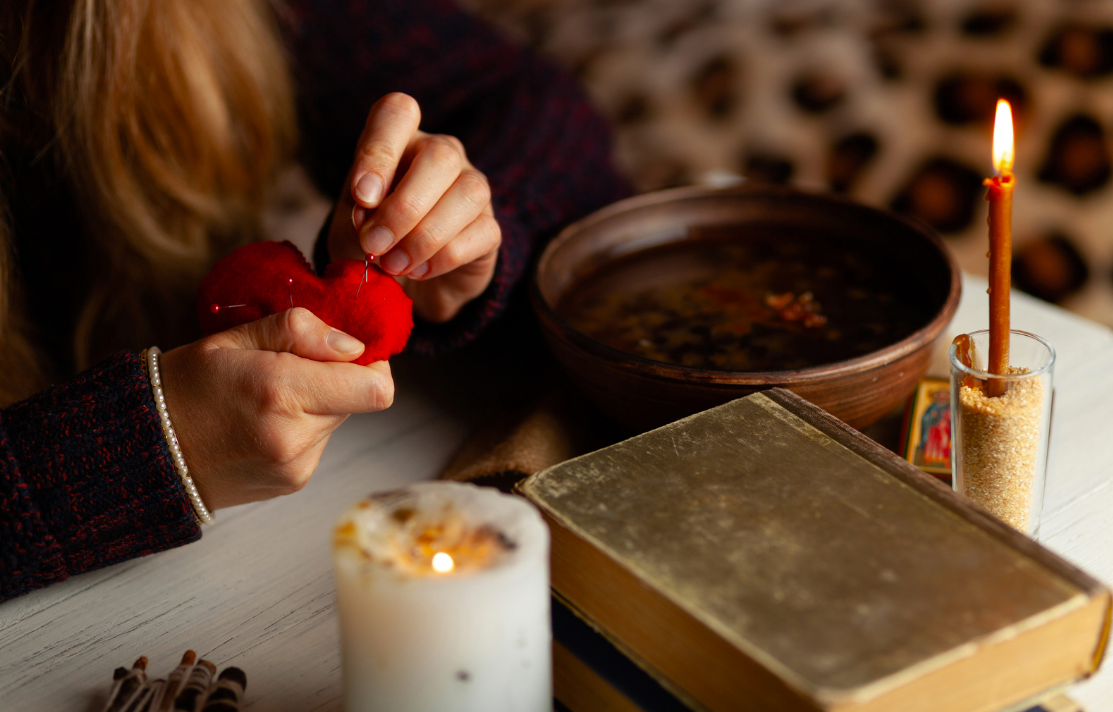
A beginner love ritual can start with a piece of paper, a clear intention and one respectful action. You do not need to buy a collection of tools or promise yourself a particular person’s love. The useful starting question is: what do I want to practice in my own life, and what remains another person’s choice?
People use “love spell” for different spiritual and symbolic practices, including spoken wishes, written intentions, candle rituals and objects representing connection. Believing that an object carries meaning does not establish that it changes another person’s feelings. This guide gives you a simple way to plan a personal practice while leaving room for uncertainty and freely chosen relationships.
Five simple love-spell variations to choose from
1. A self-love affirmation
Choose a sentence such as “I can welcome love while keeping my voice.” Say it in front of a mirror if you like, or read it privately. Follow with one kind action toward yourself.
2. A water-themed fresh start
Draw a wave on an intention card or use an ordinary wash as a moment to begin again. No cinnamon, oils, loose petals, honey or crystals need to go into bathwater.
3. A pink-light intention
Place a pink card beside a battery candle. Name qualities you hope to welcome, such as warmth and reliability. Leave any particular person free to choose.
4. A sweetness jar without food
Put a note naming something kind you want to offer inside a clean, dry, empty jar. Keep it safely stored. No honey, private belongings or candle on the lid is needed.
5. A dream-intention card
Write a question about your own hopes and set it somewhere secure before bed. A dream can become a reflection prompt; it does not identify a destined partner or reveal another person’s feelings.
Choose one variation, give it a clear ending and take a small next step. Friday or lunar symbolism may enrich your practice if meaningful, but no day, feeling or dream guarantees a relationship. You do not need to perform all five or buy more supplies when a hoped-for event does not occur.
Choose an intention you can act on
“Make this person want me” depends on someone else’s feelings. “Help me speak honestly about what I want and accept the answer” gives you something you can actually do. You can acknowledge longing without making another person the object of a project.
If a person has declined contact or ended a relationship, respect that response. A private ritual does not create permission to send more messages, bypass a block or involve their friends. The guide to love spells and another person’s choices explores that question in more detail.
Plan the parts before collecting supplies
Planning a ritual can resemble planning a meal in one limited sense: decide what each part is for before adding more things. An object can mark your attention, words can name your intention and a closing action can tell you that you are finished. That analogy does not make ritual effects a scientific recipe or mean you need herbs, oils, smoke or fire.
Choose language that fits your own beliefs. You do not need to invoke an unfamiliar deity or borrow a practice you do not understand. A meaningful personal symbol can be as simple as a blank card, a familiar stone or a word written on paper.
Six steps for a simple beginner practice
- Write one intention. Keep it about a quality or action you can choose, such as honesty, patience or making room for mutual interest. Leave another person free to say no.
- Choose one optional symbol. A neutral object can remind you of that intention. Leave other people’s hair, clothes, photographs and private messages out of the practice. No object is required.
- Set up a comfortable place. Paper and a pen are enough. Use an ordinary lamp or battery-operated candle if you want light. Choose a time that fits your day; there is no required midnight session.
- Say or read your words once. You might write, in your own words, that you want to communicate openly and welcome a relationship that is freely shared. You may also stay silent. Perfect wording is not a test you must pass.
- Close the activity deliberately. Fold the paper, put away the object or close your notebook. You do not need to burn, bury or secretly leave materials anywhere.
- Choose an appropriate next action. This might be updating an honest dating profile, making time for a mutually wanted conversation or accepting that someone is unavailable. Record the action separately from any wish about the outcome.
A filled-in beginner plan
Here is a fictional plan for Rowan, who wants to date again and tends to agree with everything to seem more appealing. The practice is about expressing an ordinary preference honestly.
- Intention
- Say what I actually enjoy instead of inventing an answer to impress someone.
- Symbol
- A blank index card, representing room for a conversation rather than a scripted response.
- Words
- I can be curious about someone and be honest about myself.
- Closing action
- Put the card inside a notebook and end the practice.
- Practical follow-through
- Answer the next appropriate question about a hobby truthfully, while allowing the other person to have different interests.
- What Rowan can review
- Whether the answer was honest. Another person’s attraction is still theirs to decide.
Keep tools and ingredients optional
Some traditions give particular colors, plants, dolls or lunar phases symbolic roles. Those meanings vary, and this beginner exercise does not require adopting a universal correspondence chart. Choose a symbol for what it means to you rather than buying it because someone promises it will force a result.
A jar or doll can be discussed as a symbolic object without recommending that a beginner bind representations of two people together or use someone’s belongings secretly. If your aim is a shared practice, explain the actual activity and ask first. For fuller examples, see consent-based love rituals.
Use no substances on another person’s body or in food, drink or belongings without their informed agreement. Do not assume that an herb or oil is harmless because it is natural. This paper-based version needs no ingestion, skin application or smoke.
If you choose a candle, follow practical fire guidance
A flameless light avoids the need to manage an open flame. For anyone choosing a candle, the U.S. Fire Administration’s candle guidance recommends a stable holder, separation from combustible items and putting the flame out when leaving. Its recommended clearance is at least 12 inches, about 30 centimetres, from anything that can burn. Do not leave a candle burning because a recipe says it must finish unaided.
Separate personal meaning from a promised result
You might feel calmer, more focused or more aware of what you want after a quiet activity. Notice your own experience without using it to infer another person’s consent. Receiving a message afterwards does not establish that the ritual caused it; receiving no message does not show that you lacked faith or used the wrong tool.
There is no required number of repetitions in this exercise. Stop if repeating it becomes a way of waiting for one person to change their mind. You can return to ordinary plans, supportive people and activities you value without treating the pause as a spiritual failure.
Before paying for help
You can complete the practice above without purchasing anything. If you choose a paid service, ask what the provider will actually do, the full price and whether there are further charges. Keep the activity separate from a claimed guarantee about love.
The U.S. Postal Inspection Service’s psychic-scam warning describes promises about love and good fortune that lead to repeated payments. Its advice includes checking costs and consulting someone you trust. A promise of a guaranteed partner, threats about refusing payment or demands for escalating fees are reasons to step back. These signs do not establish that every spiritual practitioner is dishonest.
Questions beginners often ask
1. What does casting a love spell mean?
People use the phrase for symbolic or spiritual activities involving intentions, words, objects or repeated actions connected with love. Practices and beliefs differ. In the simple exercise here, the focus is your own choices and a freely shared relationship.
2. Can a beginner make a specific person fall in love?
A ritual cannot provide a reliable way to control another person’s feelings, choices or consent. Focus on how you want to act, and accept the person’s actual answer rather than treating it as an obstacle to remove.
3. Do I need candles, herbs, oils or a doll?
No. Paper and a pen are enough for this personal reflection. A familiar neutral object or a battery-operated light can be optional symbols. You do not need flames, smoke, ingestible mixtures or another person’s belongings.
4. What words should I say?
Use a short statement you understand and can act on, such as choosing honesty or respecting a clear answer. You do not need a secret phrase, and saying the words perfectly cannot guarantee someone else’s response.
5. Must I use a particular moon phase, day or hour?
You may choose a time that has personal spiritual meaning, but this exercise has no required lunar phase, weekday or hour. Choose a safe, practical time rather than sacrificing sleep or waiting for a promised magical deadline.
6. Can I change the materials or wording?
Yes, for the optional personal reflection described here. Keep its purpose clear and choose familiar, safe materials. A substitution does not grant permission to involve someone else, and more complicated supplies do not establish greater power.
7. What if my partner does not share my beliefs?
Explain any shared activity in ordinary language and ask whether they want to participate. They can decline or stop. You can keep a private reflection focused on your own behavior without claiming your partner has joined or agreed.
8. How do I know whether the ritual worked?
Notice the action you chose and what you actually did: for example, whether you communicated honestly or respected a boundary. That does not prove a supernatural cause. A message, coincidence or dream does not establish another person’s feelings.
9. Did I fail if nothing romantic happens?
No romantic outcome was guaranteed by the exercise. Another person’s lack of interest does not show that your belief, wording or spiritual worth was inadequate. You can stop, change your own next step or seek support if the practice is increasing distress.
10. Should I pay someone to make the spell stronger?
There is no requirement to buy a service for this exercise. If you choose a paid spiritual service, establish the actual activity, total price and any further charges first. Step back from promises of guaranteed love or escalating payments to prevent harm.
Thank you for the detailed explanation on the types of love spells. It’s clear that there are many forms and rituals involved in contemporary witchcraft.
Yes, and it’s important to approach this subject with an open mind and without prejudice.
Indeed, the diversity in practics and tradition in witchcraft make it a subject worth of deep study.
Love spells and their historical significance could also be a good research area. The ethical implications of such practices should also be considered.
It is interesting how media like Harry Potter have influenced public opinion on magic and witchcraft. The social acceptance seems to be shifting gradually.
Practicing witchcraft as a traditional religion in various part of the world shows its complex nature. This article provides a lot to think about.
The historical context of witchcraft and love spells is quite fascinating. It’s intriguing to see how cultural perceptions have evolved over time.