

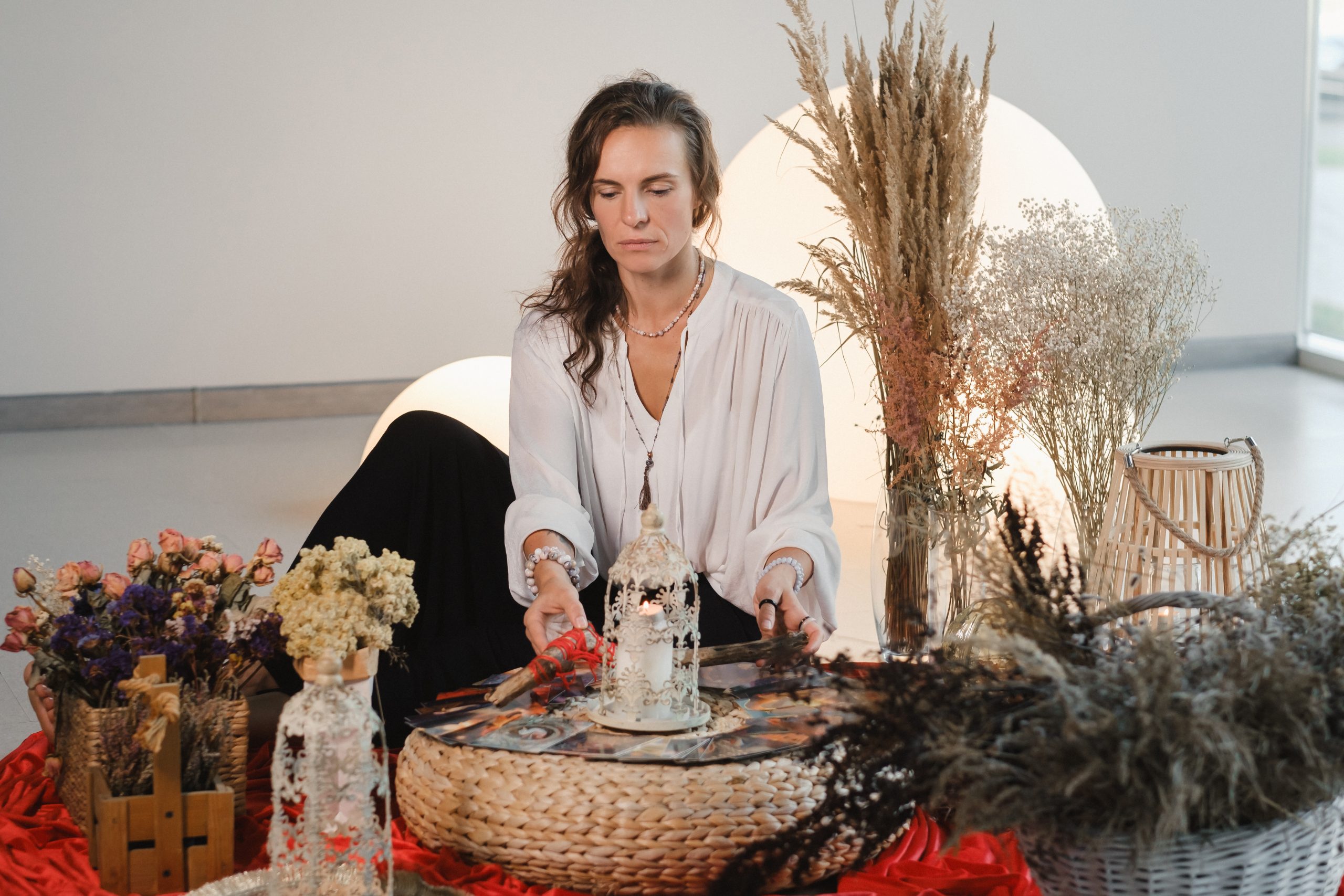
An altar can be a place you return to when you want to pray, remember, give thanks or make room for a spiritual practice. It does not have to fill a room. A small, thoughtfully chosen arrangement can carry more meaning than a crowded collection you feel obliged to maintain.
If you feel drawn to creating one, begin with a purpose rather than a shopping list. What would you like this space to help you honour? Your answer will make the next decisions easier: where to place it, what belongs there and how you want to use it.
What does an altar mean to you?
Altars belong to many religious and spiritual traditions, and their meanings are not interchangeable. Some are consecrated places of worship; others are personal arrangements for devotion, remembrance or ritual. A home practice should not be presented as the rule for every culture or faith.
For a personal altar, name the purpose in ordinary words. You might want a place to express gratitude, honour someone you miss, practise self-kindness or pause before making an important choice. If you follow a tradition with its own altar teachings, begin with those teachings and ask a knowledgeable member of that community about anything unfamiliar.
You do not have to decide that every beautiful object is sacred or give every coincidence a message. Choose objects whose meaning you can explain. A stone might recall a particular walk. A photograph might hold a family memory. A card might represent a quality you are learning to practise.
Four purposes that lead to different arrangements
Gratitude: notice something specific
Write one thing you appreciate and why it matters. Place the note beside an object connected with it, such as a drawing of your garden or a small keepsake from a friend. On your next visit, name something concrete you want to acknowledge or care for.
Remembrance: give a memory a place
A photo, name or drawing can form the centre of a remembrance altar. Add a short memory or a meaningful object if you wish. You may speak, pray or sit quietly according to your beliefs. There is no requirement to feel a presence or interpret an event as communication.
Self-love: honour the way you want to treat yourself
Choose a sentence that is believable and kind: I can speak to myself with more patience. An object might represent rest, creativity or a boundary you want to respect. Connect the practice to an action, such as leaving time for a meal or declining a demand you cannot reasonably meet.
Quiet reflection: make room for attention
A clear surface, notebook and simple visual focus may be enough. Before a reading or a personal ritual, use the space to write the question you are bringing. Afterwards, distinguish what you noticed from the meaning you gave it. You can value intuition while leaving room to reconsider an interpretation.
Choose a place that works in your actual home
Look for a stable surface with enough room to use comfortably. Keep doorways, stairs and everyday work areas clear. A dresser, shelf or tray can work; a small notebook that opens for the practice can be a better choice in a shared home.
Consider who else uses the space. Keep fragile objects, small items and anything sharp out of reach of children and pets. Avoid a vehicle dashboard, an unstable ledge or a location where objects could fall, spill or distract you. A portable altar should be put away before travelling.
Privacy matters too. You can make a personal practice without displaying it publicly. Ask before using another living person’s photo, private letter or belongings, especially on a shared altar. Agree on who may move or use the items.
Place your purpose here: a written sentence, meaningful image or symbol you understand.
Choose an object with a clear connection to the purpose. Leave space around it rather than filling every gap.
Leave an accessible place for a notebook or your hands. Keep the front edge clear so you can use the space comfortably.
This is a flexible layout, not a universal religious arrangement. If your tradition specifies directions, offerings or placements, follow its own guidance instead of assuming this diagram replaces it.
Choose objects for meaning, not for price
You can begin with paper, a drawing, a family keepsake or an ordinary item that already means something to you. A cloth is optional. A crystal, card, bell or bowl can be useful if you know why you want it there; it does not make an altar more legitimate simply by being expensive.
Before adding an item, ask: What does it represent? How will I use it? Can it stay here safely? If you cannot answer yet, leave it out and learn more. The companion guide to ritual tools on the altar explores the objects themselves; this guide focuses on giving the whole space a clear purpose.
A cauldron is one possible ritual vessel, not a requirement for every altar. If that particular tool interests you, read about working with a cauldron before deciding whether it suits your practice and available space.
Light, scent and offerings: keep the choices practical
A flameless light can create a gentle focal point without an open flame. You can also use a drawing of a candle or no light at all. Incense and scented products are optional; consider ventilation, sensitivities, pets and the people sharing your home.
If you choose a real candle, follow the U.S. Fire Administration’s candle guidance: use a stable holder, keep it at least 12 inches (about 30 cm) from anything that can burn and extinguish it before leaving or going to sleep. Do not place dried herbs, cloth or paper beside a flame.
Offerings depend on the tradition. If you leave food, flowers or water, use a suitable container, check it regularly and remove anything spoiled. Do not scatter offerings outdoors where they could harm wildlife or leave litter. A spoken thanks or written note may suit a personal practice without adding perishable items.
Free tool: plan a small personal altar
Choose the purpose and space that fit you. The planner suggests a simple starting arrangement using ordinary items. You can adapt it to your beliefs; it does not replace a tradition’s specific instructions.
Your choices stay on this page. The planner does not save or send them.
How to read your plan: It is a suggestion based on your two selections, not a reading of your energy or a prediction. The steps describe things you can choose to do. No purchase, spiritual score or promised result is involved.
Give the altar a practice, not just a place
A meaningful arrangement becomes easier to return to when you know what you will do there. Choose a brief practice that fits its purpose:
- Arrive. Put aside one distraction and notice the purpose you chose.
- Connect. Read your sentence, offer a prayer or recall a memory in a way that fits your beliefs.
- Respond. Write one observation and choose a practical next step, or decide that quiet remembrance is enough for today.
- Close. Put away anything temporary and leave the space clean and safe.
For a relationship intention, centre what you can freely choose: honesty, care, listening or a boundary. A love altar does not entitle anyone to a reunion, a reply or another person’s affection. Let it remind you of the quality of connection you want to practise.
My purpose is…
The item I chose is…
Its meaning to me is…
When I return, I will…
One action I can choose is…
What I want to reconsider later is…
Refresh, simplify or put it away when you need to
Dust the surface, check containers and remove anything that no longer suits the purpose. You might update a note or put a treasured object back in its usual place. You do not have to add something new each day or interpret untidiness as a spiritual warning.
If the space feels emotionally intense, simplify it or take a break. A remembrance altar can be put away and returned to later. Changing the arrangement does not erase your care for someone or mean that you failed to honour an intention.
When a temporary altar has served its purpose, acknowledge that in words that feel right, store keepsakes carefully and reuse or dispose of other materials responsibly. The practice can end with gratitude rather than an obligation to keep the objects on display forever.
Build a space you can actually live with. Let its meaning come from the care, attention and practice you bring to it, one return at a time.
Questions about personal altars
1. What is a personal altar?
A personal altar is a deliberately arranged place for devotion, remembrance, spiritual practice or a meaningful intention. Its purpose and objects depend on the person or tradition using it. This guide focuses on a simple altar at home, not the rules of every religious community.
2. Is an altar the same as worshipping its objects?
The meaning depends on the tradition. In the personal examples here, objects act as reminders and symbols. A photograph can honour a loved one without being treated as that person, and a written intention can focus your attention without being worshipped.
3. What should a beginner put on an altar?
Begin with a clear purpose, a stable surface and one or two meaningful items you already own. A written sentence and a photograph, drawing or keepsake can be enough. Add an object only when you can explain why it belongs there.
4. Do I need a candle or incense?
No. A flameless light, a drawing of a flame or no light at all can suit a personal altar. Smoke and open flame are optional, and may be unsuitable for your home, health, pets or lease.
5. Where should I place my altar?
Choose a stable place you can use without blocking a walkway or access to everyday essentials. A shelf, dresser or tray can work. Keep fragile, sharp, small or valuable items away from children and pets, and keep the setup away from heat and water hazards.
6. Can I make an altar in a small or shared home?
Yes. A small tray or a notebook you put away after use can give the practice a clear beginning and end. Agree on shared-space boundaries and do not display another person’s photo or personal information without considering their privacy.
7. Does my altar have to face a certain direction?
Some traditions specify directions or arrangements. A personal altar does not have a universal compass requirement. Follow your own tradition when relevant; otherwise choose a position that is accessible and practical.
8. Can I make an altar for someone who has died?
You can create a remembrance space with a photo, name, drawing or object that carries a memory. Choose what feels manageable and allow yourself to put it away if it becomes overwhelming. The arrangement does not establish that a message has been received from the person.
9. Can a love altar make someone return or contact me?
An altar cannot remove another person’s freedom to choose. A self-love or relationship altar can honour values you want to practise, such as honesty, mutual care and respect. Pair the intention with an action you can choose rather than a demand for someone else’s feelings.
10. Do I need crystals, cards or expensive tools?
No. Use what you already own and understand. A crystal or card can have a personal or traditional association, but price and rarity do not prove spiritual effectiveness. Keep your spending separate from pressure to make the altar look impressive.
11. Can I combine objects from different traditions?
Learn what an object means and how its community uses it before borrowing it. Some practices have specific teaching, initiation or access expectations. A personal connection is a reason to learn more, not automatic permission to claim every sacred practice.
12. How often should I use or refresh the altar?
Choose a rhythm that fits your life. You might return for a brief weekly reflection or at a meaningful milestone. Clean the surface and remove spoiled offerings promptly; there is no need to keep adding objects or buy a new item for every visit.
13. What if I do not feel anything unusual?
You do not have to create a special sensation. Notice whether the space helps you remember your purpose or make time for the practice. You can simplify, change the arrangement or stop without treating a quiet experience as spiritual failure.
14. How do I put away or dismantle an altar?
Pause, acknowledge the purpose it served and decide what to keep, store, reuse or dispose of responsibly. Put meaningful keepsakes somewhere safe. You do not need to leave objects outdoors, bury non-biodegradable materials or keep a setup that no longer suits you.
15. What does the free altar planner tell me?
It suggests a small arrangement based only on the purpose and space you select. It explains the suggested items, where to put them and a simple practice to try. It does not read your energy, assess your abilities or predict an outcome.
‘An altar is important’? Really?! It’s just stuff on a table! Can’t people find better ways to connect with their feelings than stacking random objects? 😂
‘Respect their beliefs’? Sure, but come on, folks! Let’s be real about the fact that some people take this WAY too seriously for my taste!
‘Random objects’? Each item has its own significance! People find meaning in different ways, so why not respect that? Not everyone relates to spirituality the same way.
This idea of having an altar is interesting but kinda wild too—like who has time for all these rituals every day?! Can’t we just chill out instead?! 😅
But rituals help ground us; it’s not about time but intention! Can’t you see how they enhance mindfulness and connection?
Intention shmention! Sometimes people overcomplicate things when they could simply enjoy the moment without all the fuss!
I really like this article! It made me feel warm and fuzzy inside. Altars are super cool and I wanna make one now! 🕯️ It’s nice how you can put anything on it that means something to you. I’m excited!
You know, this whole altar thing sounds neat, but isn’t it just a fancy way of being sentimental? I mean, can’t we just enjoy nature without making it a whole ritual? Just saying! 🤷♂️
This is just another way to waste time. Who needs an altar? Just live your life without all these rituals. 🙄 It’s too much effort for nothing!
LOL, why not just stick a candle next to your bed and call it an altar? 🤣 You don’t need a whole setup; sometimes simpler is better!
This article provides some great insights into the practice of creating altars for spiritual connection. It’s fascinating how personal items can symbolize deeper meanings in one’s spiritual journey.
‘Altar’? More like ‘altar-ed’ my expectations! Why do we need fancy setups to feel connected? Can’t we just meditate with a donut instead? 🍩