

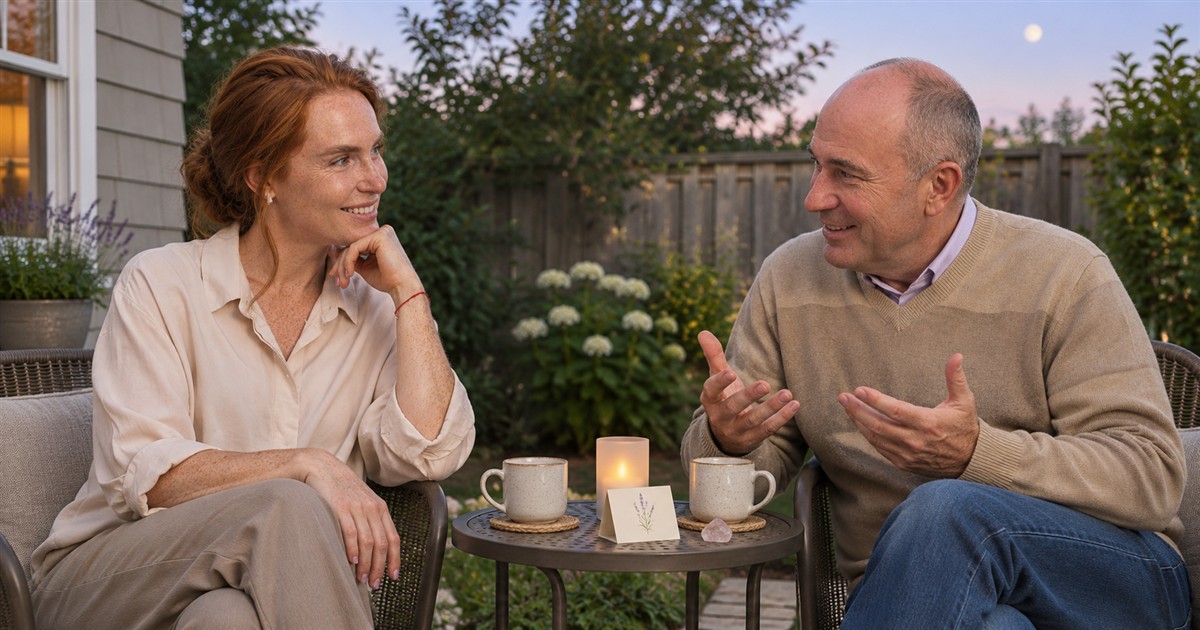
A full moon can make an ordinary evening feel set apart. If lunar magic is part of your life, use that brightness as an invitation to notice love: what you appreciate, what you hope for and how you want to care for yourself or someone close.
Choose one of the seven rituals below. Each has a solo version and a shared option, so being single, apart or uninterested in touch does not leave you outside the practice. A simple invitation is enough; no one has to participate to prove affection.
Choose one ritual for this evening
1. A welcome moment of touch
Ask whether a hug, hand-holding or sitting close would feel good. If yes, choose the form and length together. Solo: wrap yourself in a comfortable blanket and name one way to care for yourself.
2. Quiet attention
Sit comfortably with normal breathing and notice the room. Shared: spend a short quiet moment side by side; eye contact is optional. Solo: say a blessing for the quality you want to bring to love.
3. A circle of appreciation
Invite each willing participant to name something appreciated and something needed. Passing is always allowed. Solo: write a private appreciation note that you do not need to send.
4. A moonlit pause
Look from a window or step into a safe, accessible outdoor place. Notice the actual sky and set an intention. Clouds are fine; moonlight does not have to touch your skin or a jar of water.
5. A movement blessing
Choose one song and move in a comfortable way, seated or standing. Shared: ask before taking a hand or moving close. Solo: let the movement mark a fresh start without judging how it looks.
6. Two hopes, one next step
Each person names a hope for the coming weeks, then chooses one practical step they freely want to take. Solo: separate what you want from what you can choose today.
7. A meal with meaning
Share familiar food and ask what makes it meaningful. Keep ingredients and dietary needs clear. Solo: prepare something you enjoy and name a small source of gratitude. Use ordinary lighting or battery candles.
Give the ritual a beginning and an ending
Begin by choosing the activity, checking that it is welcome and putting away distractions where practical. A folded intention card, a familiar stone or a battery light can mark the space. Say something like, “May this time hold care, honesty and freely offered connection.”
When the activity ends, offer thanks in your own words, put the symbol away and return the room to ordinary use. You do not need to keep an activity going until someone cries, feels energy or agrees to greater intimacy. A quiet evening can still be meaningful.
Keep lunar timing flexible
Check a current lunar calendar or NASA’s moon-phase guide if you want to work near a full moon. The full moon does not always occur at the end of a calendar month. Its symbolism need not become a claim that everyone’s emotions or relationships must change on schedule.
You can practice the evening before or after when that suits your beliefs and availability. An indoor ritual is as valid a personal choice as an outdoor gathering. Do not lose needed sleep or make a difficult journey just to meet a time.
Use the invitation, not the ritual, to decide what happens next
Touch, a shared meditation or a romantic meal does not imply consent to sex or another activity. Ask about the next step separately and accept a changed mind. RAINN’s consent guidance explains ongoing, voluntary agreement.
If the evening concerns a serious hurt, a celebratory activity should not pressure anyone to forgive or reconnect. Use a specific relationship-repair conversation when appropriate. For an ending, the full-moon release ritual offers a private alternative. To follow a whole cycle, try the eight-phase lunar journal.
Questions about this practice
1. Do I need a partner?
No. Every idea has a solo version for reflection, self-care or gratitude.
2. Must I perform all seven rituals?
No. Choose one activity that fits your energy, circumstances and intention.
3. Does the full moon always fall at month-end?
No. Lunar phases follow their own cycle rather than the calendar month. Check a reliable current phase guide.
4. Can I practice when it is cloudy?
Yes. Seeing the Moon is optional for these personal rituals.
5. Can I do the ritual indoors?
Yes. A comfortable indoor setting is suitable; an outdoor gathering is not required.
6. Do I need real candles?
No. Ordinary lighting or battery candles can mark the occasion without a flame.
7. Is moon water required?
No. These practices need no water exposed overnight, drinking ritual water or adding ingredients to a bath.
8. Does a hug mean consent to further intimacy?
No. Ask about each activity separately. Either person can pause or change their mind.
9. What if eye contact feels uncomfortable?
Sit side by side, look at a symbol or keep your gaze where comfortable. Eye contact is optional.
10. Can friends join a moon circle?
Yes, if they want to. Agree that anyone may pass, leave or keep personal details private.
11. Can I move while seated?
Yes. Choose movement that suits your body and setting, or simply listen to the song.
12. Must we share private dreams?
No. Each person chooses what to share. A wish for connection does not require disclosure.
13. What if a partner declines?
Accept the answer and choose a private practice or another time if they welcome that. Participation is not a test of love.
14. Can the ritual fix a serious conflict?
A ritual cannot supply an apology, behavior change or agreement. Address the actual issue and seek appropriate support when needed.
15. How do I end the evening?
Offer thanks if meaningful, put materials away and let the activity finish. No particular emotion or sign is required.