

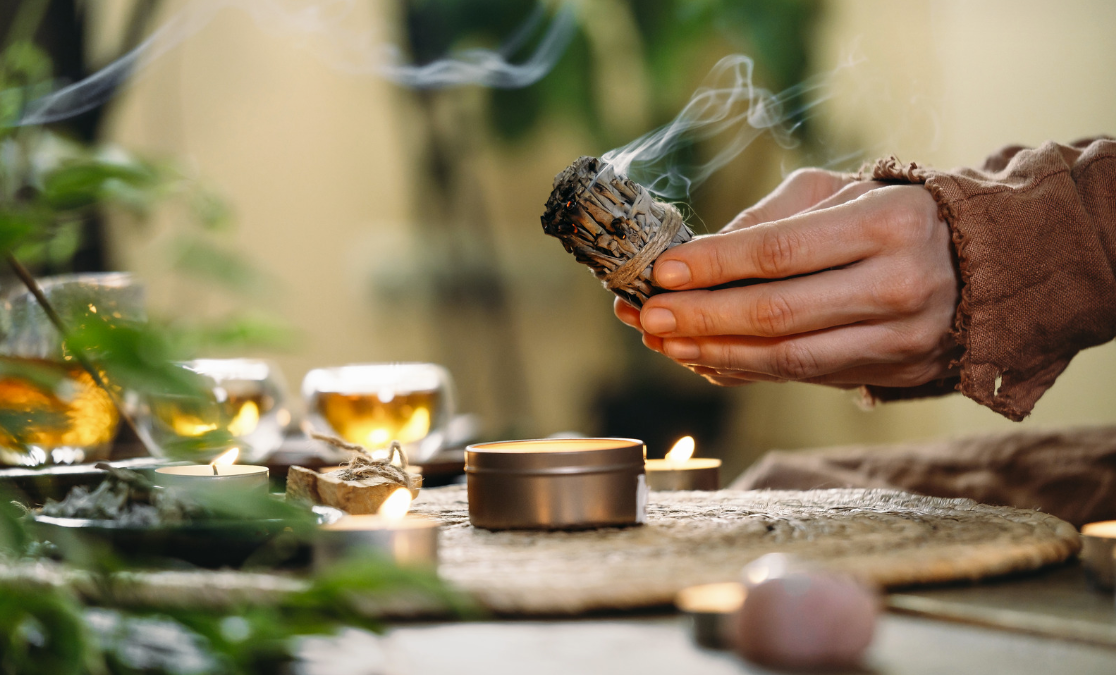
White magic is a name people often give to practices intended to help, bless or protect. You might hear it used for a welcoming-home ritual, a wish for someone’s wellbeing or a personal intention before a difficult conversation. The word describes how someone understands the practice; it does not prove a result.
The useful question is what the person actually proposes to do. A loving intention can sit alongside respect, practical care and a willingness to accept an outcome. It can also be used to excuse pressure or an unrealistic promise. Looking at the details tells you more than a reassuring label.
What the label can—and cannot—tell you
People do not all mean the same thing by white magic. One person may be describing a private blessing. Another may use it as a contrast with practices they consider harmful. Someone else may prefer the name of a particular tradition and avoid the white-and-black distinction altogether.
Ask for an explanation rather than assuming a shared rulebook. What will happen during the practice? Who is involved? Is it being offered as a meaningful spiritual act, or sold as a way to guarantee an external event? A claim about intention is different from evidence that a ritual can cure illness, remove a debt or change someone’s feelings.
For the contrasting term, see our guide to black magic, beliefs and judging a claim. Neither label is a reliable way to rank cultures or decide that an unfamiliar religion is dangerous.
White magic and Wicca are different kinds of terms
Wicca is a religious and spiritual path, while white magic is a label used to describe a perceived purpose. The Pagan Federation’s account of Witchcraft and Wicca describes different traditions and approaches within the Craft. It is a useful reminder to listen to how people name their own practice.
A practitioner’s beliefs about deities, ritual, community and ethics belong in that context. Do not assume that every witch worships the same gods, follows the same text or describes their work as white magic. You can ask respectful questions without adopting a practice or claiming a tradition as your own.
Look at the everyday choice behind the intention
A private blessing can mark a fresh start. Ask housemates before using shared space, and keep ordinary cleaning and fire precautions in place.
A ritual can express your hope for closeness. A shared practice needs willing participation; a clear refusal remains a refusal.
A kind wish can accompany a meal, a lift or a listening ear. Ask which help is welcome, and keep professional care available when needed.
These examples have something you can assess: the action you take and the other person’s response to it. You can notice whether you listened, respected a boundary or followed through on an offer. That is different from deciding that a later coincidence proves a supernatural effect.
Good intentions still need consent
Calling a ritual loving does not give you permission to collect hair, take clothing, use someone’s photograph in a service or put something in their food or drink. Nor does it make a secret attempt to influence an unwilling partner a shared practice.
Start with a simple invitation: “Would you like to do this with me?” Explain what you mean and accept a no without trying to reinterpret it. If someone has asked for no contact, leave them space. A spiritual interpretation does not create new permission to approach them.
Our consent-based love ritual guide offers practices focused on personal reflection or a willing partner. You can also keep your own private wish centered on how you want to act, without asking it to decide someone else’s life.
Keep health and fertility claims separate from spiritual support
A blessing can express care for someone who is ill or hoping to have a child. It cannot guarantee conception, a healthy pregnancy or a cure. Do not interpret an unsuccessful outcome as a failure to believe strongly enough.
The NHS overview of infertility explains that fertility problems have different possible causes and that assessment and treatment depend on the situation. Seek qualified medical guidance for fertility or pregnancy concerns rather than relying on a ritual promise.
For other health-related practices, the National Center for Complementary and Integrative Health recommends considering evidence about safety and effectiveness and discussing care decisions with a health professional. Personal spiritual meaning does not turn an oil, crystal or candle into a demonstrated treatment.
When a friend is waiting for medical news
You might want to offer a blessing because you care. First ask whether your friend would welcome that. They may prefer company, help with a meal or privacy. Respecting their answer is part of the care.
If you share a quiet moment, keep its purpose clear: support while they wait. Do not promise that a ritual will change a test result, and do not ask them to delay an appointment or treatment. You can offer to help with an ordinary task and let the medical team address the medical question.
Protection and abundance need practical follow-through
A ritual about protection might help you name a boundary you want to keep. It does not guarantee that no one can harm you. Address an actual safety concern with appropriate practical help instead of waiting for a sign that a spell has taken effect.
Likewise, an abundance intention does not cancel a debt or guarantee income. If you want to use the symbolism, connect it to a concrete task: review a bill, organize a document or seek suitable advice. Avoid paying for a promised financial result when that spending would make the underlying problem harder.
A setback does not, by itself, show that someone has cursed you. Our guide to spotting a spell-related scam explains questions to ask before sending money, including when a reassuring promise becomes pressure to pay again.
You can keep a practice simple
You do not need an expensive kit to mark an intention. You might sit quietly, write a sentence about the kind of care you want to show or place an ordinary object somewhere that reminds you to follow through. Decide when the practice ends so that it supports your day rather than taking it over.
Choose materials with everyday safety in mind. A candle does not need to burn all day or disappear completely. The U.S. Fire Administration’s candle guidance recommends flameless options and extinguishing candles before leaving or sleeping. There is no need to burn paper, ingest unfamiliar ingredients or put substances in someone else’s food.
When considering a paid practitioner, ask for a clear description of the service and its full price. Leave room to disagree or decline. Age, confidence and the words white magic do not establish credentials or guarantee that a promised result will happen.
Questions about white magic
1. What is white magic in simple terms?
People commonly use white magic to describe spiritual or magical practices intended to help, bless or protect. It describes an intention or interpretation. The label alone does not establish that a practice works, is safe or respects everyone involved.
2. Is white magic the same as Wicca?
No. Wicca is a religious and spiritual path with its own traditions. White magic is a broader label people may use when describing a helpful intention. Ask practitioners how they describe their own path rather than assigning the same beliefs to everyone.
3. Does a good intention make a ritual harmless?
No. Consider the materials, actions and people involved. Taking someone’s belongings, putting ingredients in their food or pressuring them can cause harm even if the person doing it describes the intention as loving or protective.
4. Can white magic make someone love me?
You cannot rely on a ritual to produce another person’s affection or agreement. Focus a practice on your own choices or share it with a willing partner. Respect a refusal, a block or a request for no contact.
5. Can white magic improve fertility or guarantee a healthy pregnancy?
A ritual is not a fertility treatment and cannot guarantee conception or a healthy pregnancy. Seek qualified medical guidance for fertility or pregnancy concerns. A voluntary spiritual practice may have personal meaning alongside care, without being a substitute for it.
6. Can a blessing cure an illness?
A blessing can express care or support, but it does not establish a cure. Do not stop treatment or delay seeking medical care because of a spiritual claim. Ask the person what kind of practical help they would welcome.
7. Will an abundance spell remove debt?
A ritual does not cancel a bill or a debt. If the symbolism helps you focus, pair it with a practical step such as opening the relevant statement or seeking appropriate debt guidance. Do not spend money on a guaranteed financial outcome.
8. Do I need candles, herbs or expensive tools?
No. For personal reflection, a quiet moment, a written intention or an ordinary object you already own can be enough. Materials do not guarantee a result, and you do not need to take someone else’s personal items.
9. Must a candle burn until it is completely gone?
No. Extinguish a candle before leaving or sleeping, and keep it in a stable holder away from materials that can burn. A flameless light or a practice without candles avoids the need for an open flame.
10. Does a setback mean someone has used black magic?
An argument, broken object or difficult day does not establish a curse or a supernatural cause. Consider ordinary explanations and the practical help available. Step away from anyone who uses fear to demand further payments.
11. Can I do a blessing for another person?
Ask what the person is comfortable with, especially if you want them to participate or use their belongings. They may welcome a kind wish, prefer a different tradition or decline. Keep their wishes and private information with them.
12. How can I choose a spiritual practitioner carefully?
Ask what the service includes, what it costs and what claims are being made. Look for respect for consent, clear limits and room to decline. A white-magic label, age or confident manner does not guarantee expertise, safety or a particular outcome.
The notion that white magic does not infringe on another’s free will is intriguing. It seems to focus more on personal growth and positive outcomes rather than manipulation.
It is interesting to note that white magic has roots in ancient cultures like Greek and Roman traditions. However, some modern perspectives may not be aligned with these ancient practices.
The distinction between white and black magic is quite significant. It’s fascinating how white magic emphasizes on positive intentions and ethical conduct.
Spiritual evolution through white magic can offer a constructive path for those feeling stuck in life. It’s noteworthy that this kind of magic promotes ethical practices.
I agree. Using white magic to align one’s energy with positive outcomes sounds like a beneficial approach.
White magic appear to be a more socially acceptable form of magic due to its emphasis non-harmful practices. Still, it’s important to consider the ethical implications and cultural contexts the practice.
Indeed, the ethical framework of white magic is crucial in making it a more palatable form of spiritual practice for many.
I agree with both of you. Understanding the cultural context is essential for appreciating the complexities involved.