

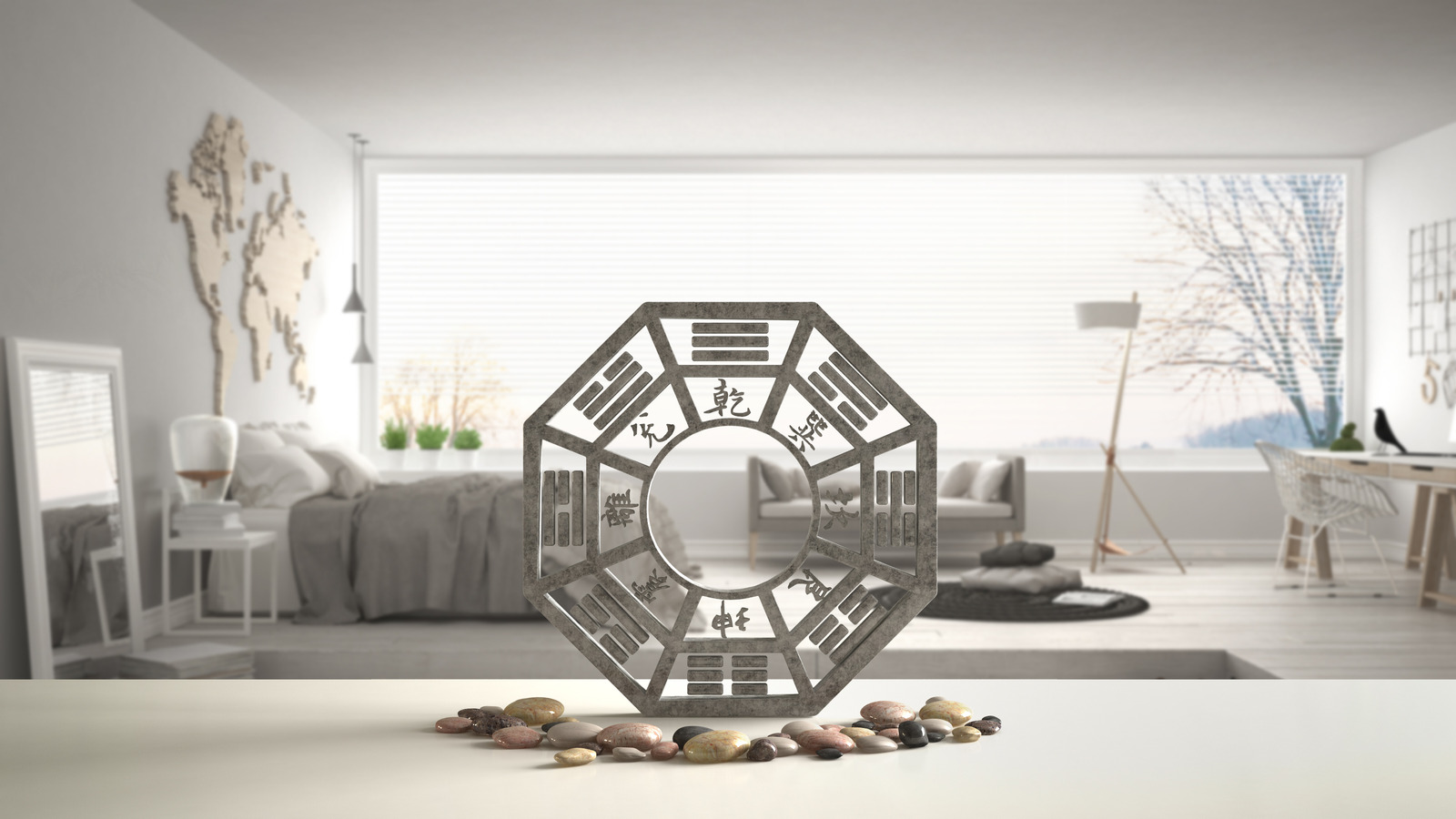
Feng Shui can be a way to think about the relationship between a place and the life you want to live there. When your question is love, start with a room that feels comfortable to you and, if it is shared, works for both people. A change in furniture or symbolism does not guarantee that someone will arrive, return or fall in love.
You can explore the cultural practice while keeping a second question practical: what would make this space easier to use, more welcoming or more respectful of everyone who lives here? Answering that question gives you something to act on without blaming yourself or your home for being single.
Feng Shui is more than a list of romantic decorations
Feng Shui has a Chinese cultural setting and includes approaches to the placement and arrangement of space. The Hearst Museum of Anthropology’s discussion of a Chinese divination compass connects it with arranging space for harmony and with a practitioner’s interpretation of time, place and surroundings.
The museum’s example is a luopan, or divination compass, dated to about the early 1900s. The Wetaskiwin museum’s account of the luopan also describes it as a specialist directional instrument. Neither object account is a test showing that pink bedding, paired ornaments or a mirror arrangement produces a relationship.
If you want to study a particular system, keep the teacher, method and context with the advice. Do not combine instructions from unrelated guides and assume the result is one traditional rule. The room review below is a modest exercise inspired by attention to space; it is not a professional compass reading or a prediction of romantic luck.
Begin with how the room actually works
Stand at the entrance and notice the everyday tasks: getting to the bed, opening storage, using a light, charging a necessary device and leaving the room. Make room for those tasks before adding objects meant to symbolize love.
A clear route matters more than making a photograph look symmetrical. A bed against a wall, a small room, a single bed or a mobility aid is not evidence that you are blocking romance. Work with your space, access needs, rental agreement and budget.
| Suggestion you may encounter | A useful question | A modest option |
|---|---|---|
| Clear clutter | What is making a daily task difficult? | Clear one route or surface. Keep another person’s belongings for them to decide about. |
| Use objects in pairs | If two people use the room, can each reach what they need? | Make access fair without buying matching furniture. A useful shelf and a table can serve different needs. |
| Add a love symbol or rose quartz | Does this have a meaning I actually want here? | Choose an existing object or a small drawing. Keep its meaning personal rather than treating it as a device that attracts a partner. |
| Change the lighting or color | Can everyone comfortably read, rest and use the room? | Try an existing lamp or movable textile before repainting. Keep fabric away from lamps and heat sources. |
| Remove or move a mirror | Is its reflection, placement or access bothering anyone? | Change the position if it solves a real problem. There is no need to discard a useful mirror because you fear it cancels love. |
Making space for a partner is a conversation
If you already share a bedroom, ask each person what they need before changing it. Storage, light, privacy, medical equipment, work and sleep arrangements can matter in different ways. Equal care does not always mean identical objects or exactly half of every shelf.
If someone may move in, discuss timing, possessions and how the space will be shared. Clearing a drawer is not the same as agreeing to live together. Do not throw away their things, remove meaningful photographs or make decisions about their belongings to satisfy a decorating rule.
If you are single, your room can serve your current life. You do not have to leave an empty wardrobe waiting for an imagined person. Making room for dating might instead mean choosing time for a social activity or being clear about the kind of relationship you want.
Symbols, memories and personal taste
A pair of objects can remind you of reciprocity; one beautiful object can be meaningful too. Artwork showing one person does not condemn you to loneliness. Keep or put away a photograph because of your own preferences and any shared agreement, not because someone has declared it a cause of romantic failure.
Rose quartz can be an optional decorative or personal symbol. Our guide to love crystals and the difference between symbolism and results offers ways to connect an object with a choice you control. Its price, shape or quantity does not buy another person’s affection.
Skip additions that make the room harder to use
You do not need scented oils, incense or candles to do this exercise. Ask about preferences before introducing a scent into a shared space; an unscented room is a valid choice. Avoid improvising oil sprays or putting unfamiliar ingredients on bedding.
For lighting, a suitable lamp or battery-operated candle can provide an alternative to a flame. If you use a real candle, follow the U.S. Fire Administration’s candle guidance: keep it in a stable holder, at least 12 inches, about 30 centimetres, from things that burn, and extinguish it before leaving or sleeping. Romantic symbolism does not change those precautions.
Five steps for a room review with a clear result
- Name one everyday aim. Choose a usable path, accessible light, agreed storage or a place to talk without moving piles of belongings.
- Ask anyone affected. Agree on what may move. Keep other people’s possessions and the purpose of shared areas in the conversation.
- Choose one reversible change. Try moving a basket, clearing your own surface or adjusting an existing light before making a purchase.
- Set a spending limit. Start with what you own. If money is involved, write the currency and the maximum you choose; an optional symbol is not a required cure.
- Review the actual task. Can you now reach the light or use the drawer? Keep the change if it works. Whether someone dates you is a separate outcome.
A filled-in example: Ren’s small bedroom
In this fictional example, Ren wants a clearer bedside area before inviting a date over. The room stays Ren’s home, and an invitation remains something the other person can decline.
- The practical aim
- Reach the bedside lamp and put down a glass without moving a stack of papers.
- The reversible change
- Sort Ren’s own papers into an existing basket and move the lamp within reach. Leave the doorway clear.
- The spending limit and result
- Ren chooses a limit of 20 Canadian dollars (CAD). Using existing items costs CAD 0, leaving CAD 20 of that chosen budget unspent. These are fictional budget figures, not store prices.
- The next step and review
- Check whether the lamp and surface are easier to use, then send the invitation Ren already wanted to make. A comfortable room does not guarantee a yes.
Keep the room and the relationship in perspective
A room can reflect hospitality, but it cannot replace honest communication, meeting people or respecting a clear answer. For a relationship conversation, the guide to discussing trust and agreements offers concrete questions about what each person actually wants.
If a small change is useful, you can enjoy it without claiming it changed someone’s feelings. If dating is disappointing, you do not need to buy a stronger remedy, remove everything you love or conclude that your home has failed you.
Questions about Feng Shui and love
1. Can Feng Shui guarantee that I find a partner?
No guaranteed romantic outcome follows from the room exercise here. It can help you choose and review a practical change, while another person remains free to make their own decisions.
2. What is a luopan?
It is a Chinese divination or geomantic compass associated with Feng Shui practice. Museum accounts describe its directional and interpretive use. That cultural context is different from evidence that a bedroom object causes romance.
3. Do I need two matching nightstands?
Matching furniture is not required for the practical review. If two people use a room, ask whether each has suitable access and storage. Different objects can meet different needs without an expensive matching purchase.
4. Must I clear space for a partner who has not arrived?
You can arrange your room for your current needs. Clearing a drawer does not create an agreement to move in or guarantee a future relationship. If someone is considering living with you, discuss the arrangement directly.
5. Should I remove every mirror or sentimental object?
Make that decision for a practical reason or an agreed preference, not from fear that an object cancels love. Do not discard another person’s possessions or treat a single image as the cause of loneliness.
6. Are rose quartz, candles or scented oils required?
They are not required for the exercise. An existing object, a drawing or no symbol can work for your chosen purpose. A suitable lamp offers light without a flame, and scents should be optional for everyone affected.
7. How do I know whether a room change helped?
Review the task you chose: reaching the lamp, opening storage or keeping a route usable. Those are observable results. A date’s response is not a measurement of the room’s energy or your worth.
Feng Shui’s principles of harmony and balance can indeed be soothing, but i remain skeptical about its efficacy specifically in attracting romantic partners.
Thee notion of decluttering and organizing ones space to invite love seem common sense, but it makes me ponder if colors truly impact romantic energies.
The suggestion to use aromatherapy and specific colors in the bedroom for enhancing romantic energy sounds appealing. However, personal preferences vary, and what works for one might not for another.
The idea of using Feng Shui to enhance personal relationships is interesting. However, I wonder if there are scientific studies that validate these practices.
While Feng Shui methods are fascinating, it is essential to understand cultural context. Adapting Eastern practices into Western lifestyles may need careful consideration to respect the origins.